
Last updated September 23, 2026
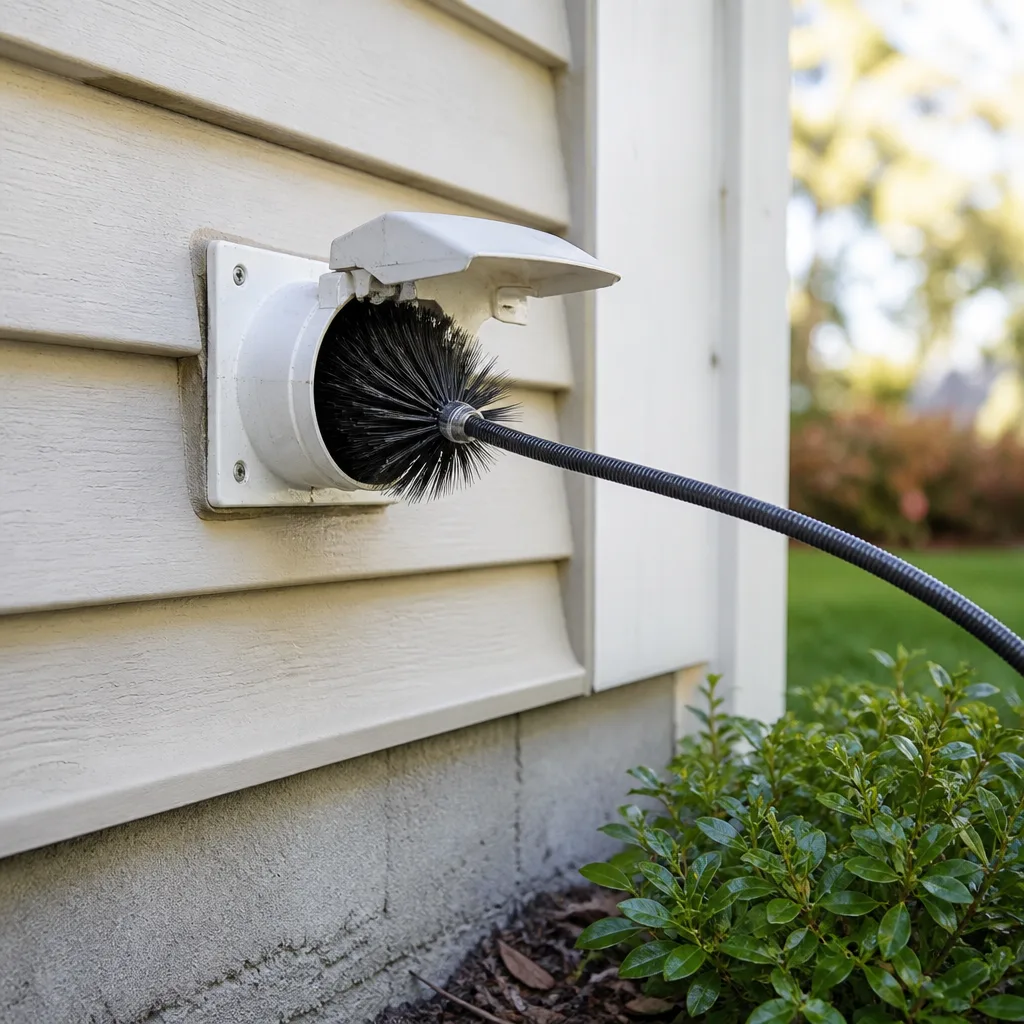
Whole-system duct and dryer vent check with before-and-after photos - you see exactly what came out of your vents
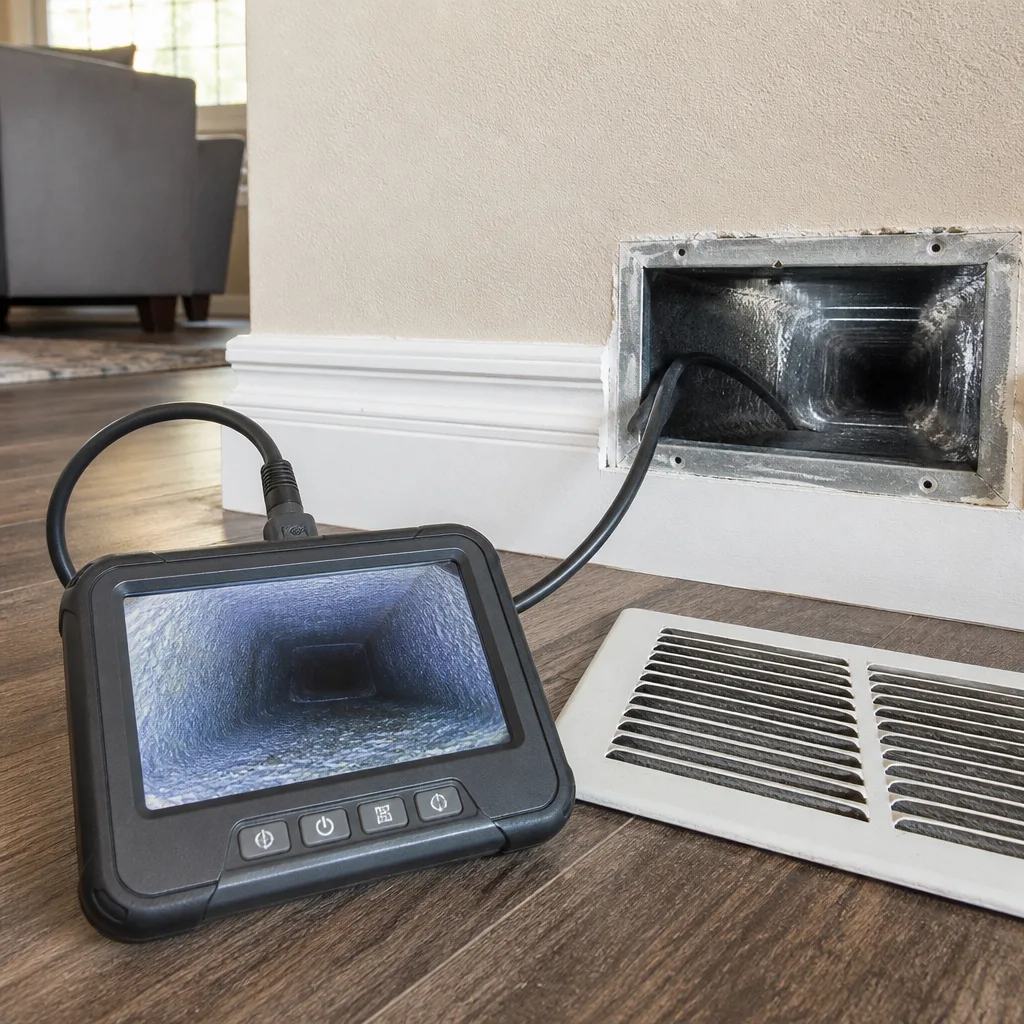
That "$99 whole-house special" is a bait ad - the real number appears once they are in your hallway, or the "clean" is a shop-vac at the register. We photograph the inside of your ducts before and after instead.
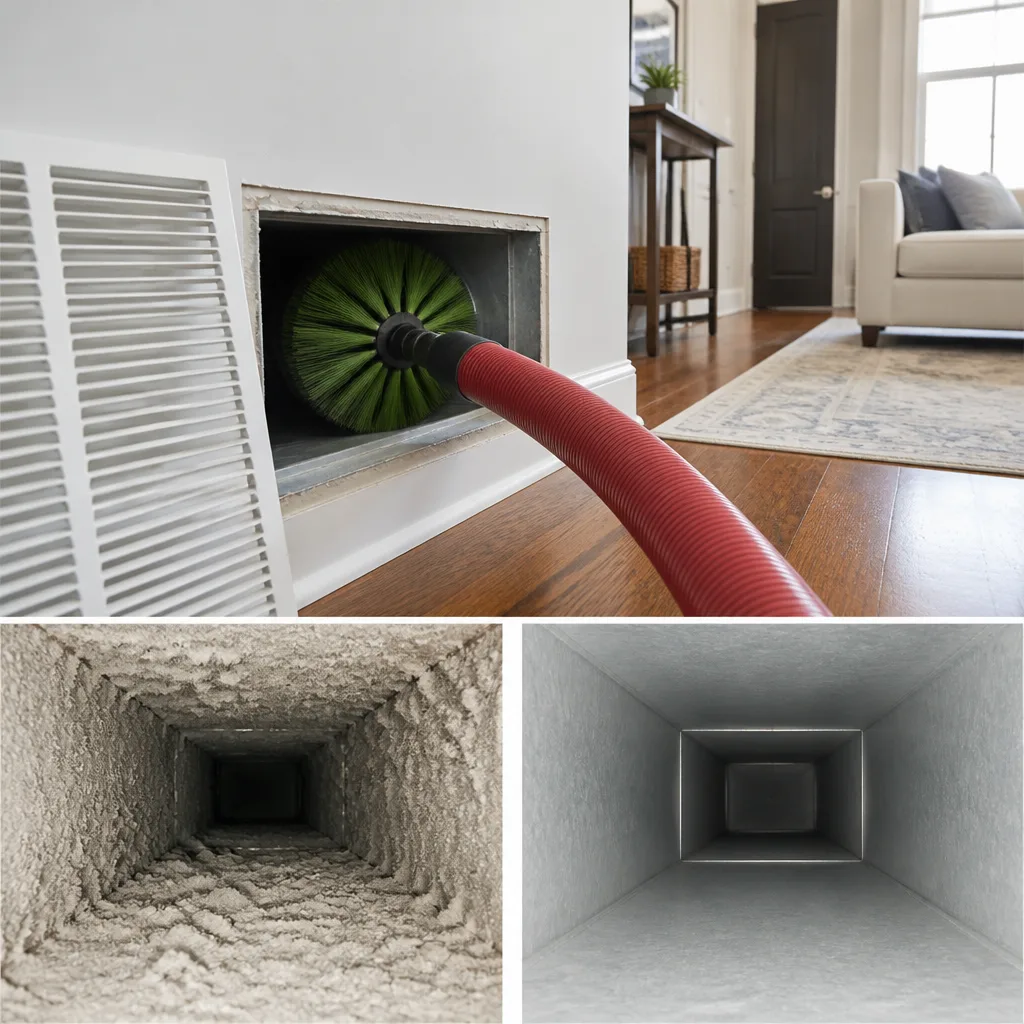
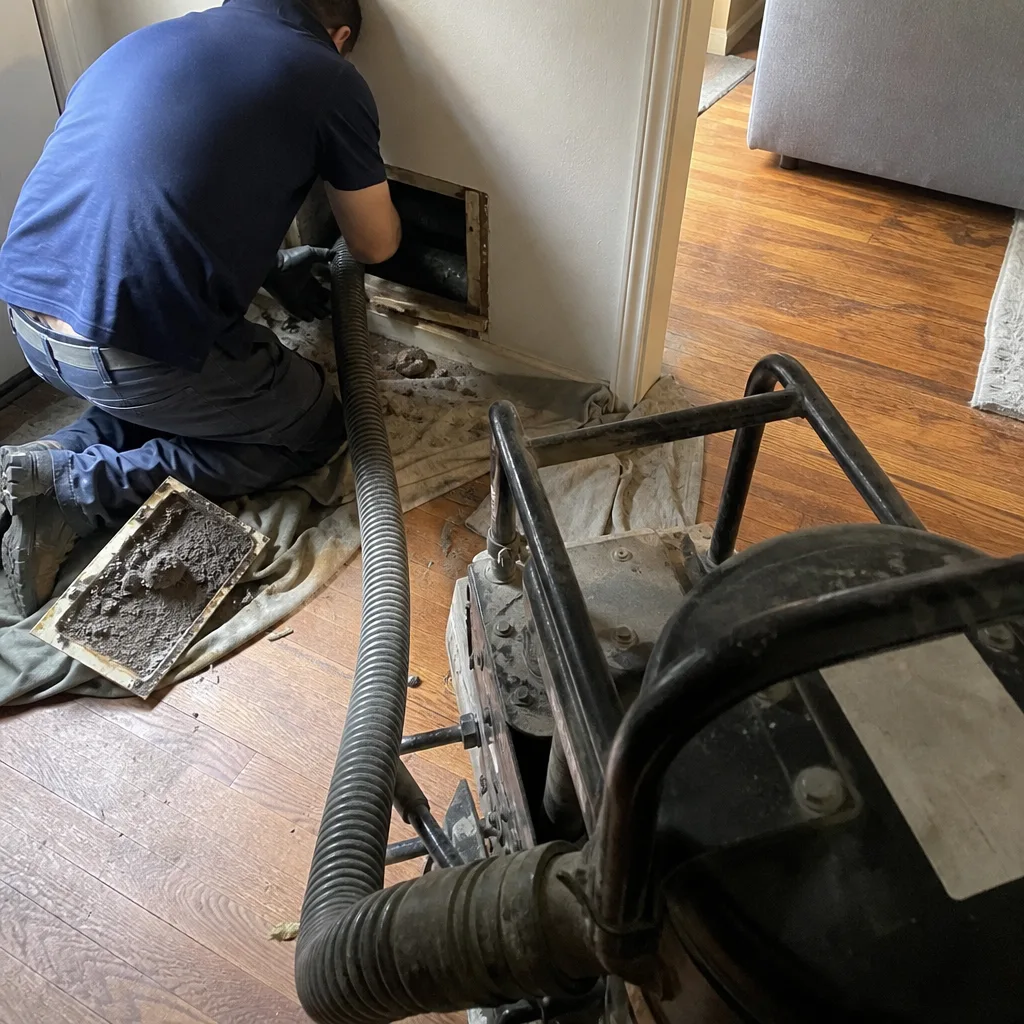 Before
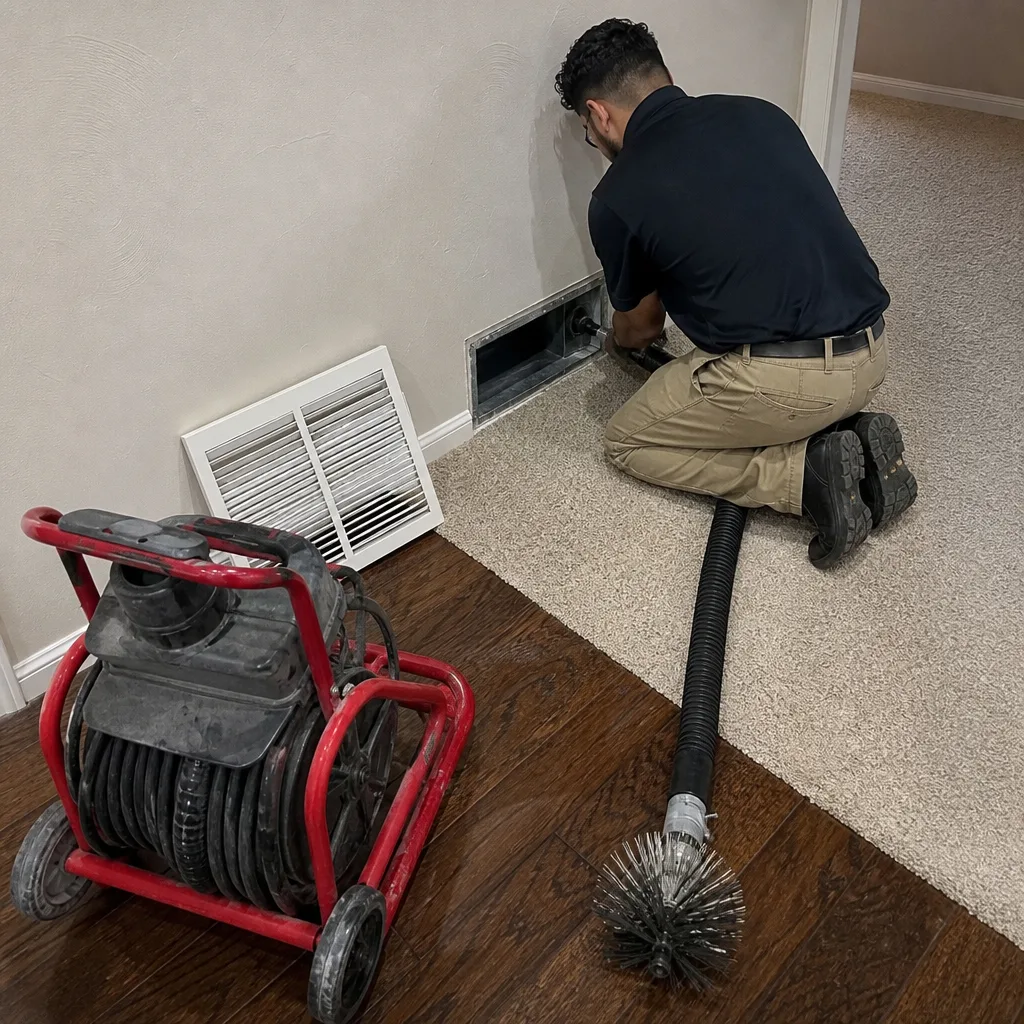 After
After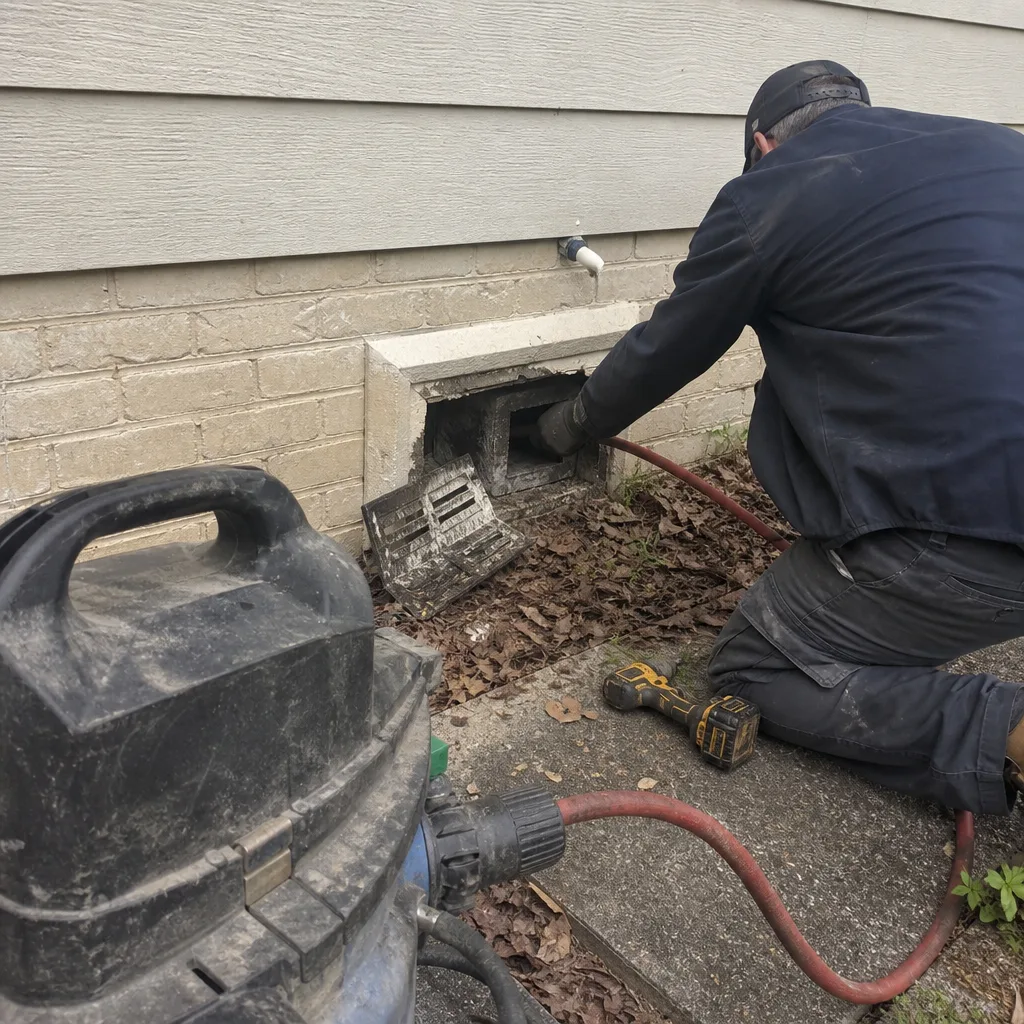 Before
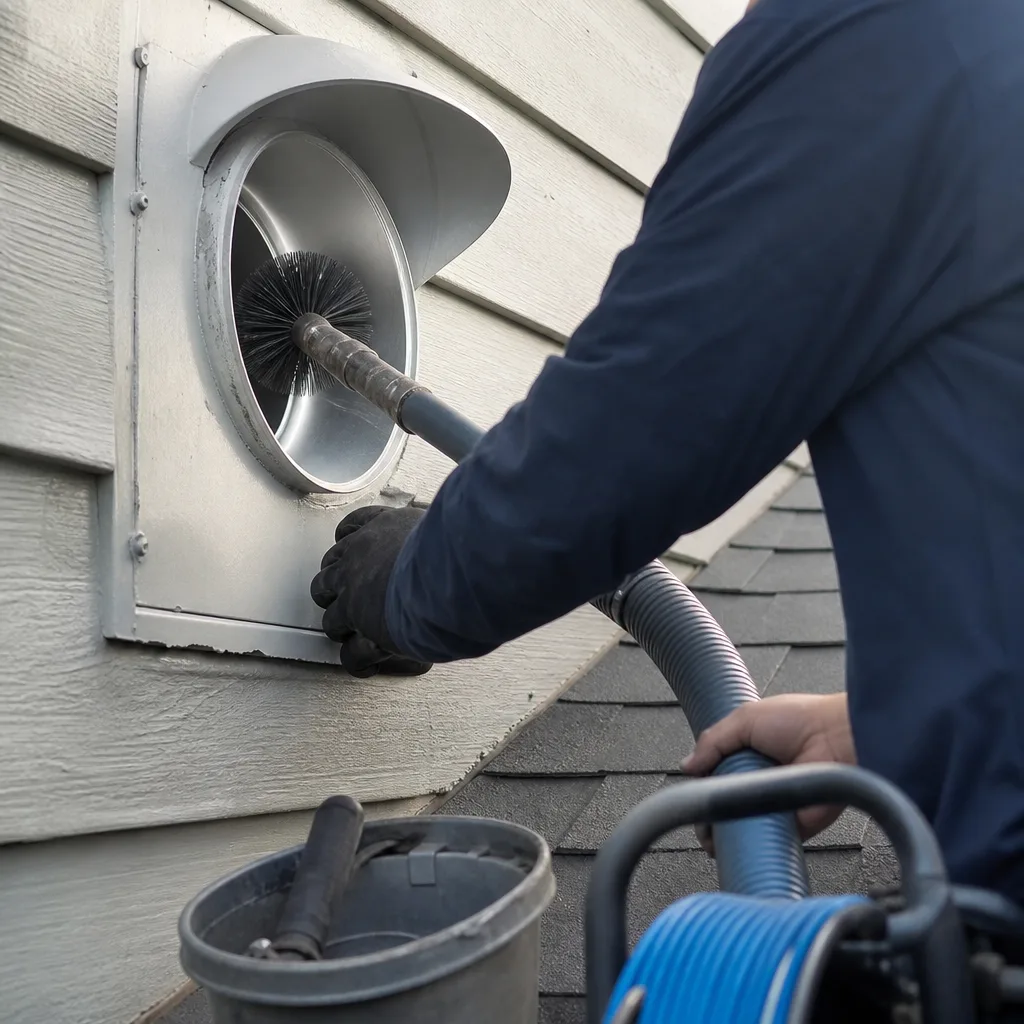 After
After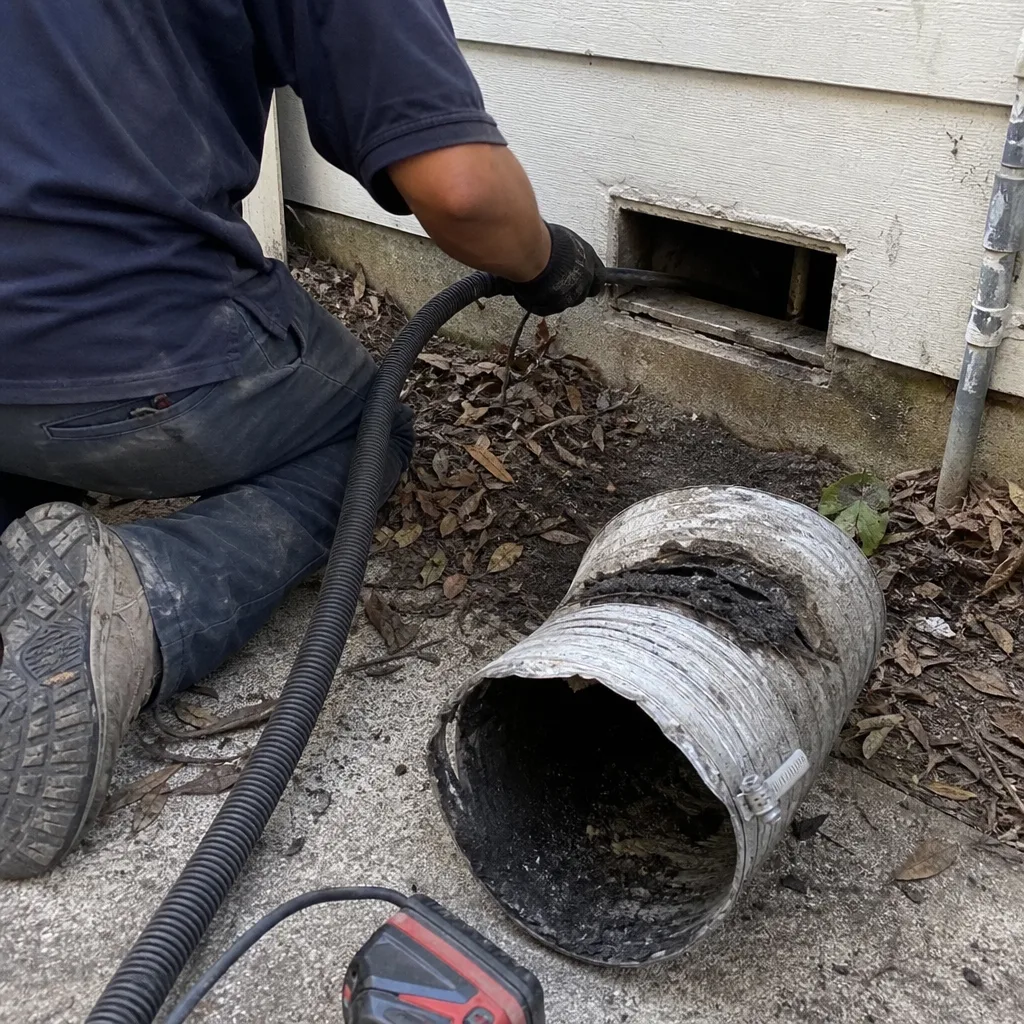 Before
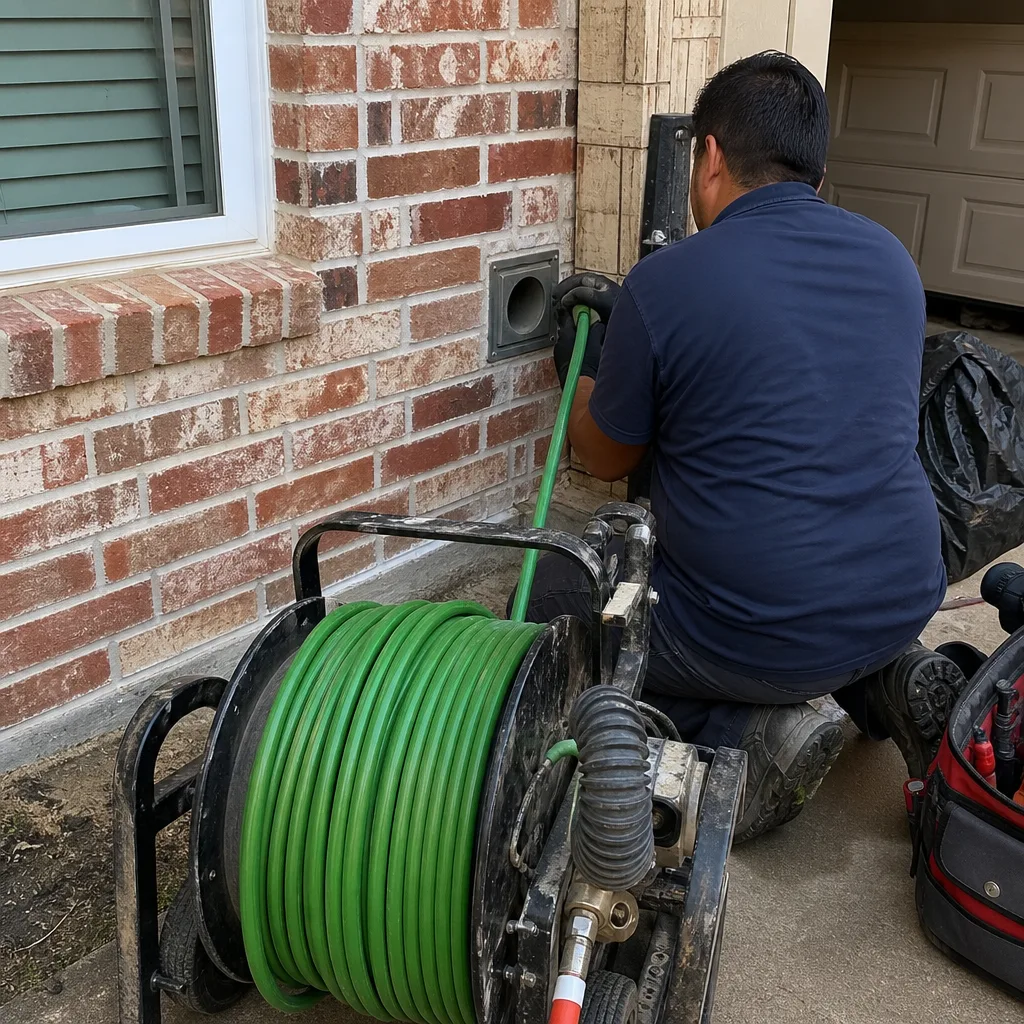 After
AfterSeasonal Air Duct Cleaning Care for Sugar Land: Year-Round Homeowner’s Guide
Sugar Land averages fewer than 30 frost days per year. Your AC system runs under load roughly eight months annually - twice as long as the systems most national maintenance guides assume. That extended runtime changes everything about how particulate accumulates, how moisture behaves inside ductwork, and what “seasonal maintenance” actually means here.
In this guide, we’ll walk through a year-round maintenance calendar built for Sugar Land’s actual climate: the pre-season inspection most homeowners skip, the hurricane protocol that can prevent a four-figure remediation bill, the post-summer inspection that reveals what eight months of continuous cooling deposits inside your return plenum (the large central chamber that collects air before it reaches your air handler), and the simple Air Duct Cleaning Maintenance Checklist for Sugar Land Homeowners that turns guesswork into a three-year trend line you can read at a glance.
Quick Answer
Sugar Land homeowners should inspect their ductwork four times per year: February-March before continuous cooling begins, June-October during hurricane season for moisture intrusion, October after peak cooling load ends, and November-January when holiday activity spikes indoor particulate. A written annual log with filter photos and airflow observations reveals whether your system is stable, declining, or needs professional attention.
Table of Contents
- February-March: Pre-Season Preparation Before Continuous Cooling
- June-October: Hurricane Season Moisture Protocol
- October: The Post-Summer Inspection
- November-January: Holiday Particulate and Filter Loading
- How to Build Your Annual Duct Log
- Equipment and Filtration: What Works in This Climate
- What Seasonal Duct Maintenance Costs in Sugar Land
- Common Mistakes to Avoid
- When to Call a Professional
- Frequently Asked Questions
BeforeAfterFebruary-March: Pre-Season Preparation Before Continuous Cooling
By late February, most Sugar Land homeowners have run the heat maybe a dozen times. The real transition isn’t thermostat direction - it’s the shift from intermittent to continuous operation. Starting in March, your air handler will circulate air 10-12 hours daily for the next eight months. Anything loose, blocked, or compromised now gets amplified.
Here’s what we inspect on every pre-season call in neighborhoods from Telfair to Riverstone, and what you can check yourself:
- Flex duct connections at the plenum. The clay soils in Sugar Land’s western subdivisions - particularly around Greatwood and New Territory - expand and contract with winter moisture changes. We’ve found separated flex duct sleeves at the plenum collar (the metal ring where flexible ducting attaches to the rigid distribution box) on multiple March calls. The gap is often hidden above insulation. Run your hand along the connection; you should feel continuous tension, not a loose sleeve.
- Register airflow balance. Close every register in the house, then open them fully. Note which rooms feel weak compared to last year. A sudden drop often means a duct run (the individual branch line serving that room) has detached or collapsed. In First Colony homes built 1985-2005, we see this where original flex duct has fatigued at the elbow bend above the hallway.
- Filter fit and frame condition. The filter slot should hold a 1-inch or 4-inch filter snugly without gaps. A warped frame lets unfiltered air bypass the media entirely. We replace filter frames on roughly 15% of pre-season visits in Sugar Land.
- Condensate line and pan. Not strictly ductwork, but directly related: a clogged condensate line backs water into the air handler cabinet, where it can wick into the return plenum through the gasket seam. Pour a cup of water into the pan and confirm it drains freely to the exterior.
What we typically find in Sugar Land pre-season inspections: dust loading of 1/4 to 1/2 inch on return duct walls, pollen accumulation at the first elbow downstream of the return grille, and occasional construction debris from original build-out in homes completed 2015-2022. The camera shows it clearly - there’s no interpretation needed.
If you’re planning professional air duct cleaning in Sugar Land, February-March is the optimal window. The system is cool, crews aren’t responding to emergency moisture calls, and you’ll enter the long cooling season with clean duct walls that won’t re-entrain debris into your supply air.
June-October: Hurricane Season Moisture Protocol
Sugar Land sits 25 miles inland, but Hurricane Harvey proved that inland distance doesn’t protect ductwork. Wind-driven rain enters through soffit vents, attic turbine vents, and damaged roof decking. Once moisture reaches fiberglass duct liner or flex duct insulation, microbial growth can establish within 48-72 hours at summer temperatures.
The critical distinction: water in your ducts is an insurance event, but only if you document it correctly and quickly.
Immediate Post-Storm Inspection (Within 24 Hours)
- Check the attic first. Look for water staining on ductwork, particularly at low points where condensate or intrusion pools. The lowest duct run in a Sugar Land attic is typically the main trunk line above the hallway - it sits on the ceiling joists and collects any water that penetrates.
- Photograph everything before touching it. Insurance adjusters need to see the water path. A photo of stained duct insulation with a timestamp beats a verbal description.
- Run the system briefly and smell. Musty or earthy odor from registers indicates active microbial growth in the duct run or plenum. Do not continue running the system - you’re distributing spores.
- Check the return plenum with a flashlight. This is the largest collection point; any significant water intrusion will show here first. Look for water lines on the metal, dislodged insulation, or rust formation.
Documentation for Insurance
Most homeowner policies cover ductwork remediation when water intrusion is documented as storm-related. What adjusters need:
- Photos with timestamps showing water staining or standing water in ducts
- A written scope from a licensed contractor stating the affected duct runs and recommended remediation
- Confirmation that the HVAC system was shut down to prevent further distribution
CleanRun provides this documentation as standard on every moisture-related call. The photo record - before, during, and after - is included as a deliverable, not an extra. We’ve worked with Sugar Land homeowners through multiple storm seasons; the claims that process smoothly are the ones with photographic evidence and a written scope from day one.
Prevention matters too. After any roof work or soffit repair, verify that attic ventilation openings are properly screened. We’ve found squirrel and rat entry points in Sugar Land attics that became water entry points during storms - the same gap serves both purposes.
October: The Post-Summer Inspection
Eight months of continuous cooling deposits significantly more particulate than four months of intermittent use. This isn’t intuitive until you see it. In October 2023, we documented a return plenum in a Sugar Creek home that had accumulated 3/4 inch of compacted dust at the first elbow - the bend where return air changes direction toward the air handler. The homeowner had changed filters quarterly. The filters were doing their job; the duct walls were simply loading over time.
What continuous operation does differently:
- Constant airflow keeps fine particles suspended longer, allowing them to reach deeper into the duct system before settling. Intermittent operation lets particles drop near the register.
- Humidity cycling in Sugar Land’s summer - 45% indoor relative humidity on a dry day, 65% after rain - causes particles to adhere more strongly to duct walls. Dry dust vacuums out easily; humidity-caked dust requires mechanical agitation.
- The return side loads faster than the supply side. This surprises homeowners. Your return ducts pull air from every room; they’re collecting, not distributing. The supply side is under positive pressure and stays cleaner.
Our October inspections focus on three areas:
- The return plenum interior. We photograph this on every visit. A clean plenum shows bare metal with light dust. A loaded plenum shows gray or brown coating, particularly at direction changes.
- Filter loading pattern. A filter that loads evenly across its face indicates balanced return airflow. A filter that loads heavily on one side indicates a duct leak or register blockage pulling disproportionately from one area.
- Supply register condition. Black staining around supply registers - common in Sugar Land homes with gas cooking - indicates backdrafting or negative pressure issues that merit duct sealing, not just cleaning.
This is the season when HVAC cleaning in Sugar Land delivers the most visible return. The system has just completed its hardest working period. Cleaning now removes the accumulated load before it compacts over winter, and you’ll have documentation of the system’s condition heading into the next year.
November-January: Holiday Particulate and Filter Loading
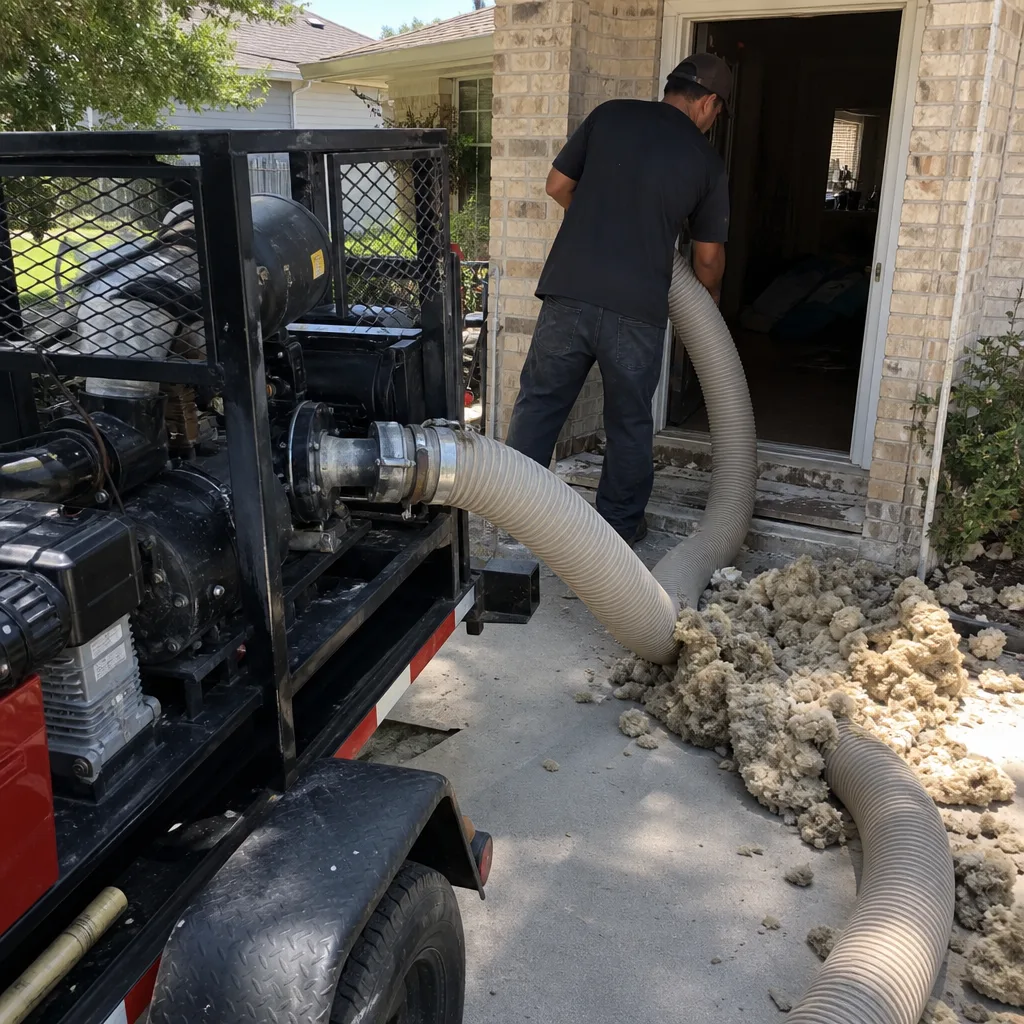
Sugar Land’s “winter” is mild by national standards, but the indoor activity spike is real. Thanksgiving through New Year’s brings extended cooking sessions, more occupants, candles, and - in many homes - portable heaters that stir settled dust. Your duct system sees particulate loads comparable to summer pollen season, just from different sources.
The useful metric here: filter loading rate, measured in weeks per visible graying.
Track it simply. Write the install date on the filter frame with a marker. Note when the filter face turns from white to light gray - not black, just the first visible loading. In our Sugar Land data, a properly sized system with sealed ductwork should show first graying at 6-8 weeks during low-use months, 4-5 weeks during peak summer, and 3-4 weeks during holiday periods.
If your filter loads in two weeks or less during November-January, one of three conditions exists:
- Undersized filter. A 1-inch filter in a system designed for 4-inch media loads exponentially faster. The restricted surface area can’t handle the particle volume.
- Return duct leak. A leak in the return path pulls attic air - hot, dusty, often insulation-laden - directly into the system. The filter loads with attic debris, not household dust. We’ve found this in Sugar Land homes where original duct tape has dried and failed at return plenum seams.
- Excessive indoor particulate generation. Candle smoke, frying without range ventilation, or renovation dust. The duct system isn’t the problem; it’s accurately reporting a source issue.
Holiday guests also stress the system in ways that reveal duct problems. If upstairs bedrooms that were “fine” suddenly can’t maintain temperature with two extra people, the ductwork may be undersized for the load - or a duct run may have separated, sending conditioned air into the attic instead of the room.
January is the right time to order your annual filter supply and schedule any deferred maintenance. Crew availability is better than in pre-season March, and you’ll enter the year with a baseline.
How to Build Your Annual Duct Log
Most homeowners have no record of their duct system’s condition over time. They rely on memory, which conflates “the technician said it was dirty” with actual data. A simple annual log fixes this and gives any future contractor - or insurance adjuster, or home buyer - a documented history.
We recommend four seasonal entries, kept in a cloud folder or physical file. Each entry takes ten minutes.
Spring Entry (March)
- Photo of new filter with date written on frame
- Photo of return plenum if accessible, or note “not inspected”
- Airflow observation: “All registers strong” or list weak rooms
- Any contractor visit: date, scope, written price, photo record received Y/N
Summer Entry (July)
- Filter photo at first graying, with weeks since install noted
- Post-storm inspection notes if applicable, with photos
- Any moisture intrusion: date, source, remediation action
Fall Entry (October)
- Photo of filter at change-out, with loading pattern noted (even/uneven)
- Supply register condition: clean/light staining/heavy staining
- System performance: maintained setpoint Y/N, any room temperature complaints
Winter Entry (January)
- Photo of new filter with date
- Filter loading rate from fall filter: “6 weeks to light gray”
- Annual summary: “System stable,” “Declining - schedule inspection,” or “Issue resolved - return leak sealed [date]”
After three years, this log reveals trends no single visit can show. We’ve had Sugar Land homeowners bring us three-year logs that clearly demonstrated a progressive return duct leak - filter loading accelerated from 8 weeks to 3 weeks over 24 months, with no filter size change. The data made the diagnosis obvious; without it, we would have tested normally and missed the pattern.
The log also protects you from unnecessary service. A contractor who recommends annual cleaning despite three years of “system stable” entries has explaining to do.
Equipment and Filtration: What Works in This Climate
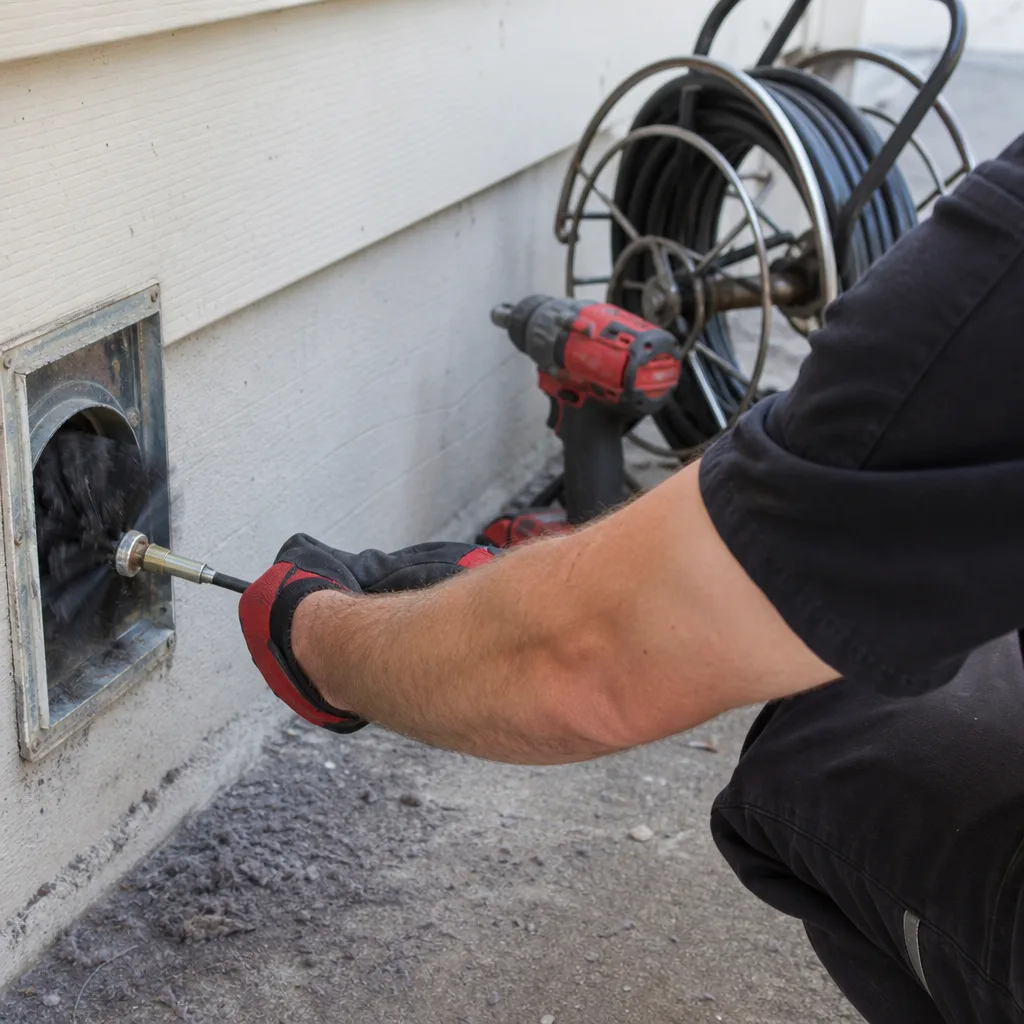
Sugar Land’s long cooling season and humidity profile favor specific equipment approaches. What works in Arizona or Minnesota may not apply here.
Filtration: MERV 11-13 pleated filters strike the right balance for this market. MERV 8 doesn’t capture the fine pollen and mold spores common in Fort Bend County. MERV 16 restricts airflow excessively on residential systems not designed for it. Aprilaire and Honeywell both manufacture 4-inch media cabinets that retrofit to standard filter slots; the increased surface area extends change intervals without pressure drop.
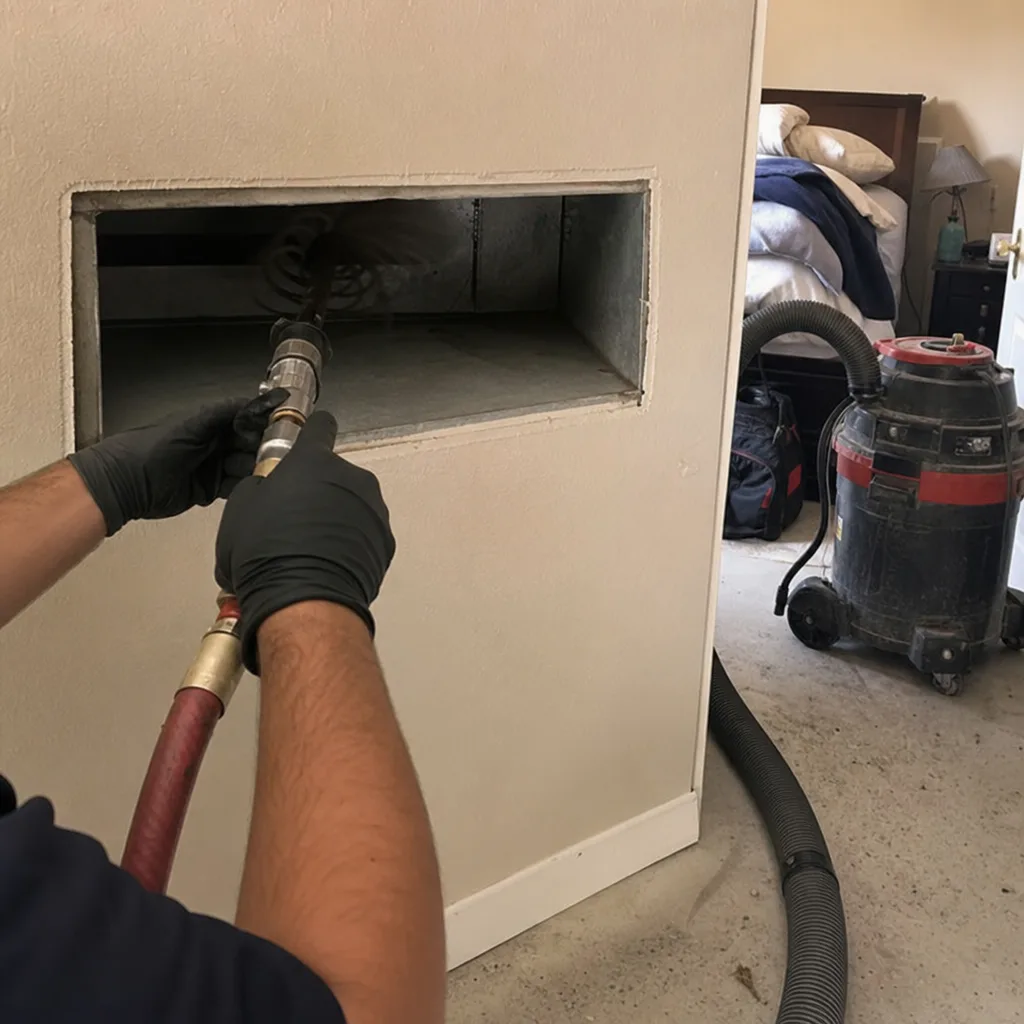
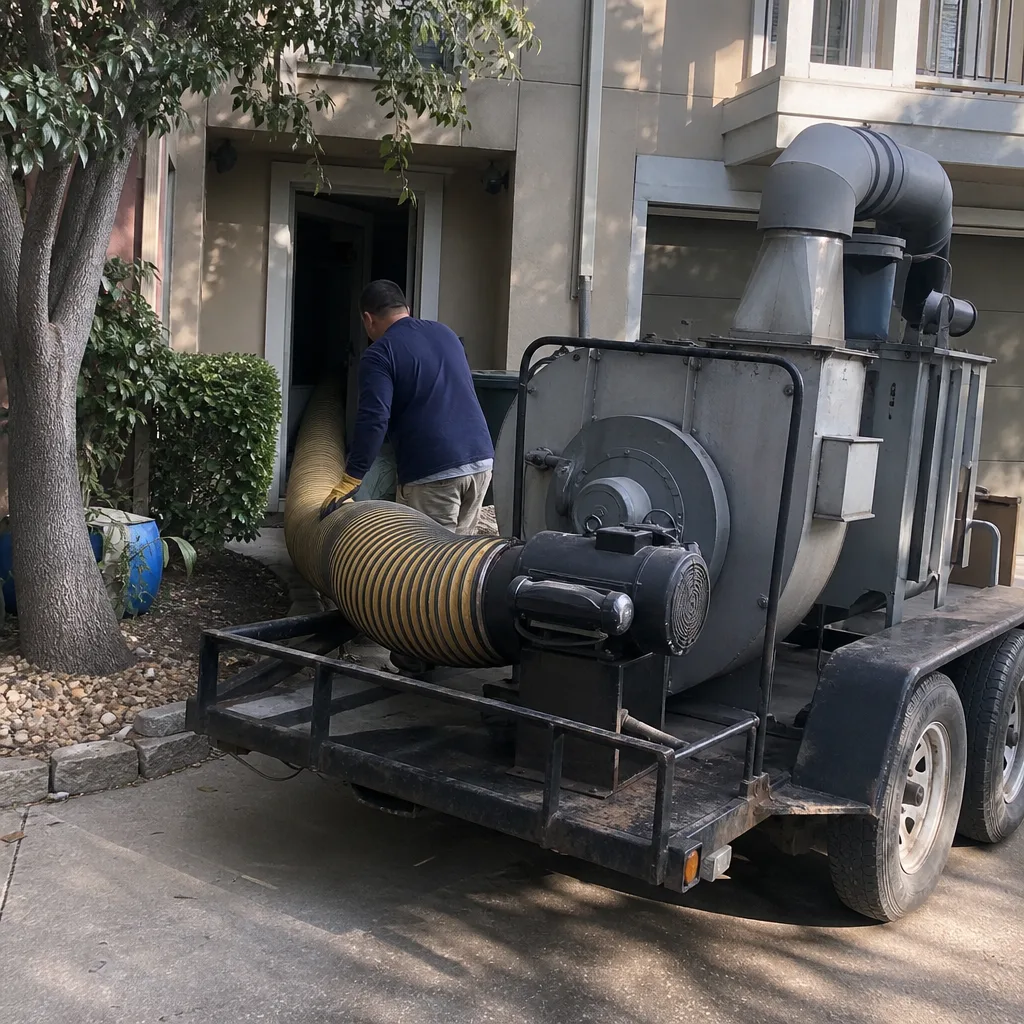
Duct cleaning equipment: Negative-pressure extraction - connecting a vacuum to the duct system and agitating debris with mechanical brushes - is the method specified by NADCA (the National Air Duct Cleaners Association). The equipment matters. Rotobrush manufactures portable systems with HEPA filtration that contain debris rather than redistribute it. Nikro produces industrial vacuums with sufficient airflow to maintain negative pressure in larger Sugar Land homes with extended duct runs. Abatement Technologies supplies containment and filtration for remediation work.
What we don’t use: shop vacuums with no containment, rotary brushes without vacuum attachment, or compressed air alone. These methods release debris into the living space. We’ve been called to remediate after “cleaning” that left homeowners with visible dust settling for days.
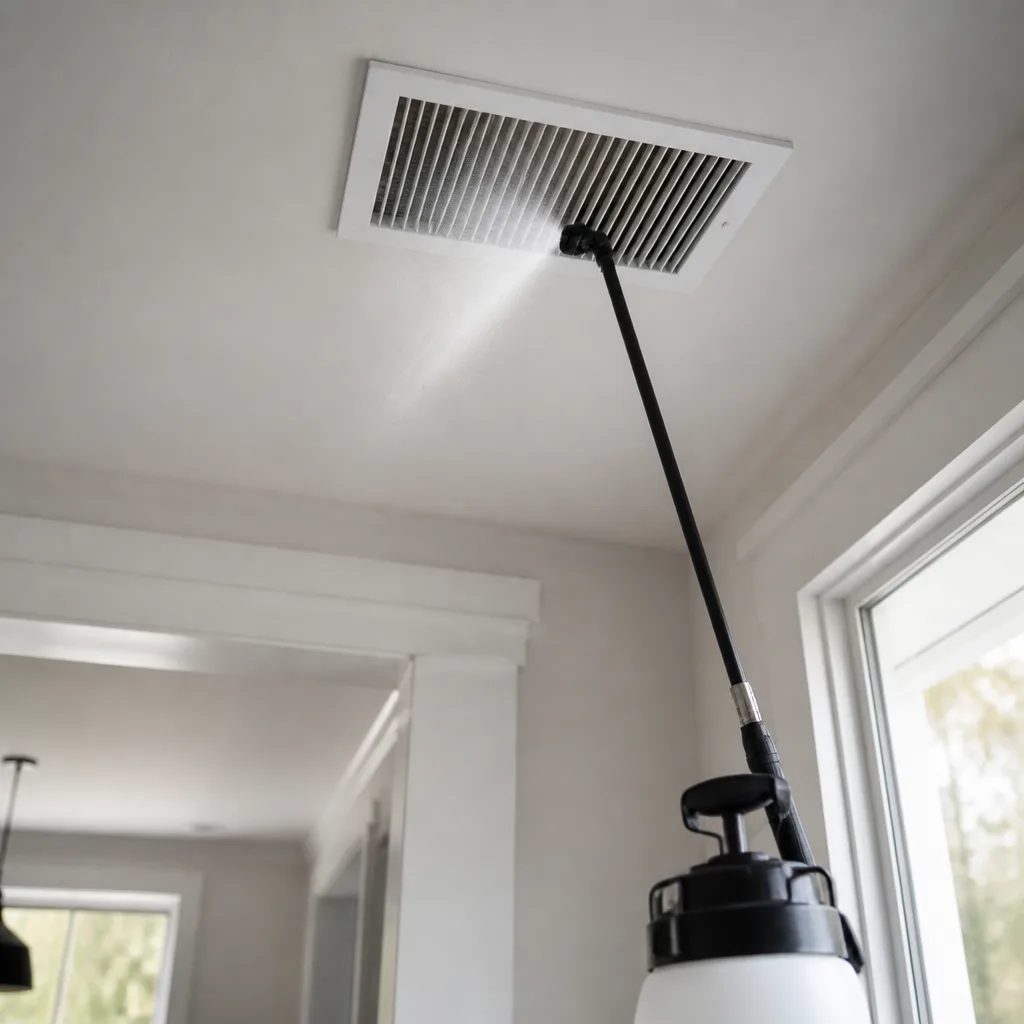
UV and sanitizing: Ultraviolet germicidal irradiation has specific applications - coil-mounted units prevent microbial growth on wet evaporator surfaces. But UV in the duct stream has limited dwell time and doesn’t address particulate. We install Honeywell and Guardsman UV systems where appropriate, but we specify them for coil protection, not as a substitute for mechanical cleaning.
The Haven Standard requires that we name the equipment we’ll use before quoting a price. You can verify any brand we specify independently - that’s intentional. CleanRun Air Duct Cleaning Sugar Land home provides full equipment specifications on every written scope.
What Seasonal Duct Maintenance Costs in Sugar Land
We publish pricing because Haven Standard Clause 1 requires a written price before any work starts. For a detailed breakdown, see our Air Duct Cleaning Cost Breakdown: The Sugar Land Homeowner’s Reference for 2026. These are the ranges we quote for typical Sugar Land homes, based on system size and accessibility:
| Service | Typical Sugar Land Home (1,800-3,200 sq ft) | What Determines Price |
|---|---|---|
| Full system air duct cleaning (negative-pressure extraction, all duct runs, before/after photo record) | $450-$780 | Number of duct runs, attic accessibility, presence of fiberglass duct liner requiring specialized handling |
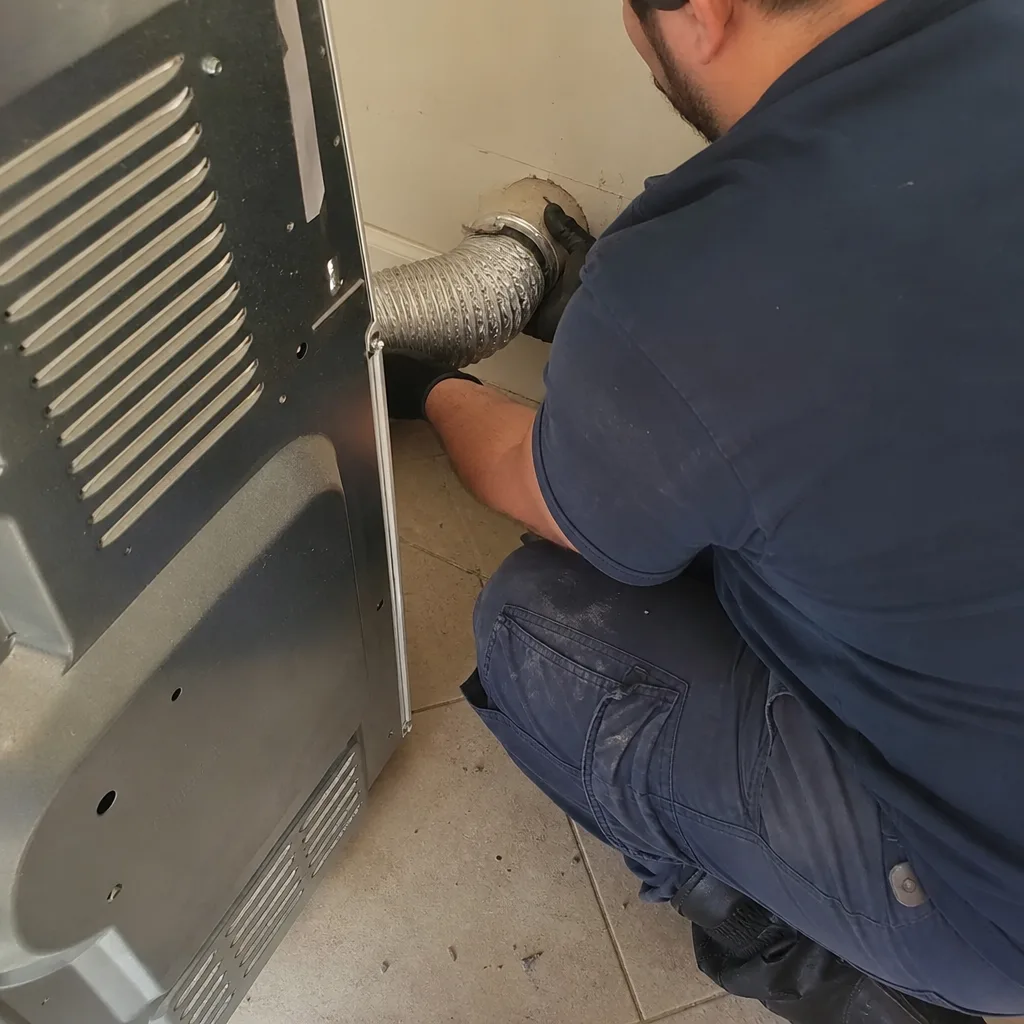
| Dryer vent cleaning (through-wall to exterior termination) | $140-$220 | Length of run, number of elbows, roof termination vs. wall termination |
| HVAC cleaning (coil, blower, cabinet, plus duct cleaning) | $680-$1,100 | System tonnage, coil accessibility (cased vs. uncased), condition of components |
| Duct repair and sealing (per duct run, includes mastic seal and mechanical support) | $180-$340 | Extent of separation, need for replacement flex duct, attic working conditions |
| Post-storm moisture inspection and documentation | $0 (if remediation follows) or $140 standalone | Scope of inspection, insurance documentation requirements |
What these prices include: the documented photo record of every duct run, delivered as part of the standard job record; the 365-Day Done Right Promise in writing; and a written scope signed before work begins. What they don’t include: per-vent surcharges, equipment “rental” fees, or post-work add-ons discovered after you’ve already agreed to a price.
The bait-and-switch model in this industry works like this: quote $79 for “unlimited vents,” arrive with a shop vacuum, discover “mold” or “heavy buildup” that requires an upgraded package, and present a revised invoice of $600-$900. The homeowner, with a stranger in their attic and time already invested, often pays. We don’t participate in this. Our price is the price, in writing, before the first panel comes off.
For dryer vent cleaning in Sugar Land, the standalone price is $140-$220. Bundled with duct cleaning, it’s typically reduced. We quote both options in writing so you can compare.
Common Mistakes to Avoid
- Waiting for visible dust at registers. By the time you see dust blowing from a supply register, the duct system is heavily loaded. The first sign is usually reduced airflow or increased filter frequency, not visible emissions.
- Using the cheapest filter that fits. Fiberglass “throwaway” filters (MERV 1-4) protect the equipment from large debris but don’t protect your air quality. In Sugar Land’s pollen-heavy environment, they load fast and pass fine particles. The savings is false economy.
- Ignoring flex duct after foundation work. Sugar Land’s expansive clay soils shift with moisture. Foundation repair, drainage work, or even significant landscaping can transmit vibration or settlement to attic ductwork. Inspect flex duct connections after any ground-disturbing project.
- Running the system after suspected water intrusion. The urge to “dry it out” with airflow is understandable and wrong. You’re distributing moisture and any microbial growth throughout the house. Shut down and inspect first.
- Accepting verbal estimates. Every legitimate contractor can provide a written scope and price. Verbal estimates allow post-arrival price escalation. Haven Standard Clause 1 exists specifically to prevent this.
- Skipping the post-summer inspection. Eight months of continuous operation is the hardest working period your system sees. The debris load in October is the true annual maximum. Inspecting in spring only misses half the picture.
- Not documenting for insurance. Storm-related duct damage is claimable, but adjusters need timestamped photos and a written contractor scope. Take the photos before cleanup, not after.
When to Call a Professional
Call for inspection when: you notice persistent musty odor from registers; filter loading accelerates without household changes; rooms that previously cooled evenly now have temperature differences of 3°F or more; you’ve had roof or soffit damage from wind or storm; or you’re purchasing a home and the seller has no maintenance records.
CleanRun Air Duct Cleaning Sugar Land offers free estimates in Sugar Land - call (346) 421-3357. Every estimate includes a written scope and price before any work begins, under Haven Standard Clause 1. We also provide free second opinions on any written estimate from another contractor; bring their quote and we’ll put our number next to it.
Frequently Asked Questions
Every 3-5 years for typical homes with sealed ductwork and standard filtration. Homes with pets, recent renovation, or known duct leaks may need more frequent service. The annual log described in this guide reveals your actual interval better than any calendar recommendation.
Professional negative-pressure extraction for a typical 2,000-3,000 square foot home runs $450-$780, including photo documentation of every duct run. Prices below $300 typically indicate limited scope or equipment that doesn’t meet NADCA standards. Call (346) 421-3357 for a written estimate specific to your system.
The $79-$149 “whole house” offers use shop vacuums or rotary brushes without containment, clean only accessible register areas, or rely on post-arrival upselling. A legitimate quote specifies the equipment (Rotobrush, Nikro, or equivalent), the method (negative-pressure extraction), and the deliverables (photo record, written scope) before work begins. If those elements aren’t in writing, the low price isn’t real.
Require a photo record of every duct run, before and after. CleanRun includes this as standard on every job, delivered as part of the job record. If a contractor can’t or won’t photograph the interior ductwork, you have no verification that cleaning occurred beyond the registers you can see.
Humidity itself doesn’t require more frequent cleaning, but it changes what accumulates. Moisture-caked dust adheres more strongly and may require mechanical agitation rather than vacuum alone. The bigger humidity risk is moisture intrusion from storms, which can require immediate remediation rather than scheduled maintenance.
Duct cleaning addresses the distribution pathways - the metal or flex ductwork that moves air throughout your home. HVAC cleaning includes the air handler components: evaporator coil, blower assembly, and cabinet interior. In Sugar Land’s long cooling season, the coil and blower load significantly and benefit from periodic cleaning. We offer both services and specify exactly which components are included in every written scope.
The Bottom Line
Sugar Land’s climate demands a maintenance calendar that national guides don’t provide. Eight months of continuous cooling, hurricane moisture risk, and clay soil foundation movement create specific inspection priorities: pre-season flex duct checks, post-storm documentation, post-summer particulate assessment, and holiday-period filter monitoring. A simple annual log with photos and airflow notes transforms vague concern into actionable data. For more guides & resources, explore our blog. The homeowners who avoid surprises are the ones who inspect systematically and demand written documentation from any contractor they hire.
Written by Tomas Reyes, Owner at CleanRun Air Duct Cleaning Sugar Land, serving Sugar Land since 2013.