
Last updated September 23, 2026
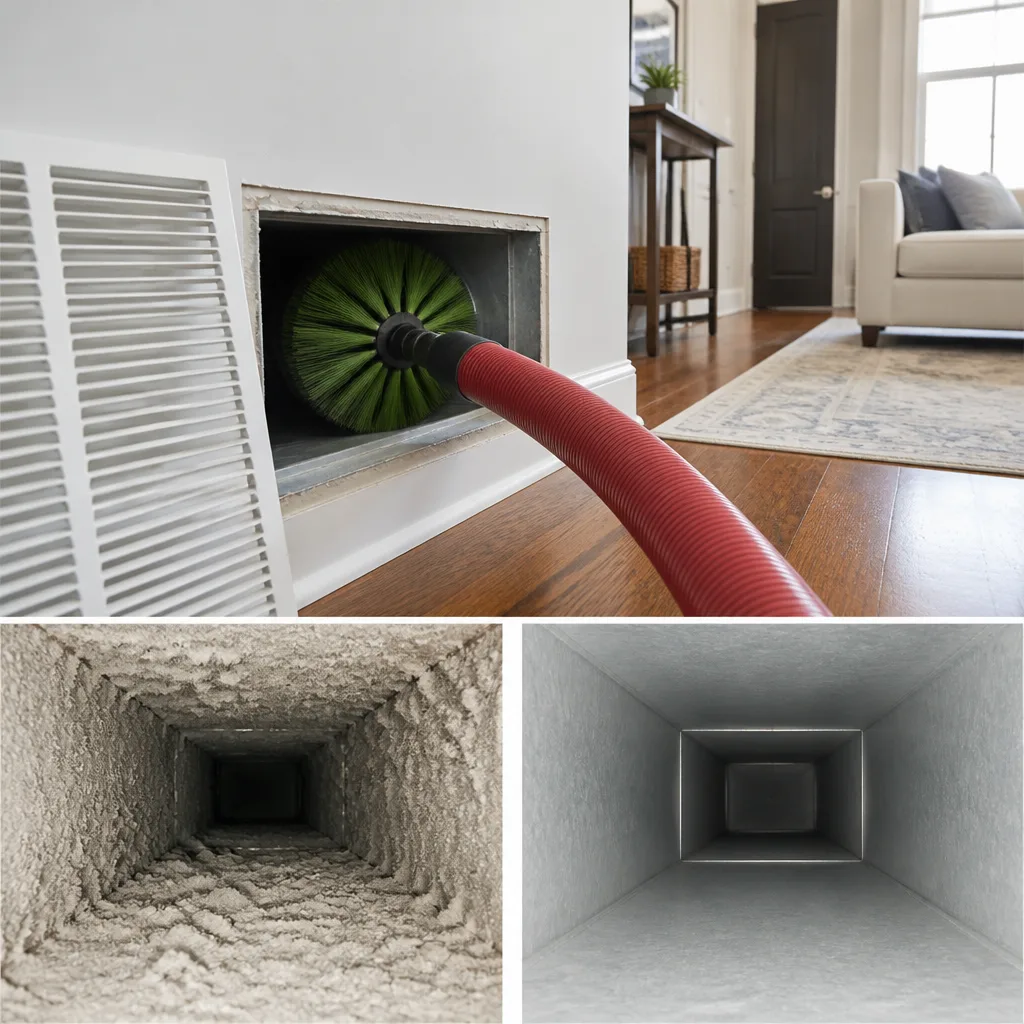
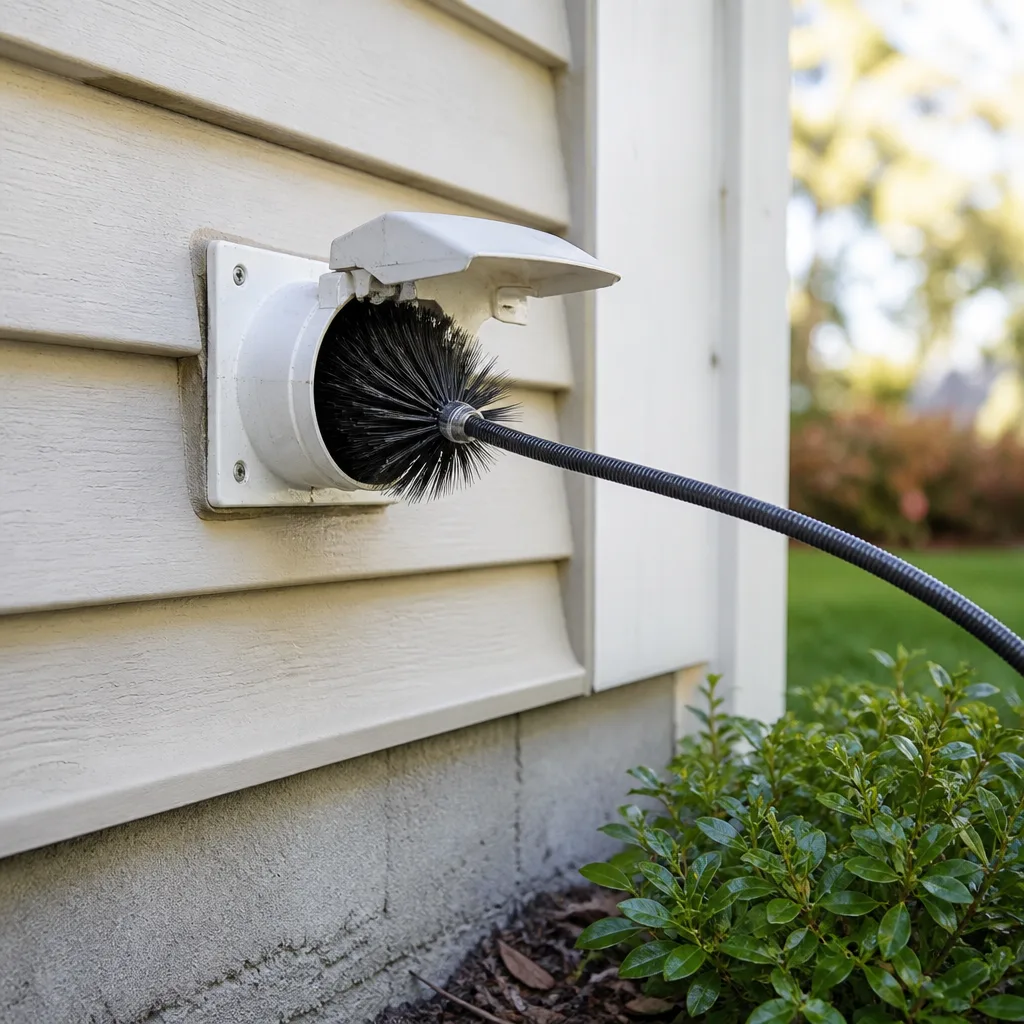
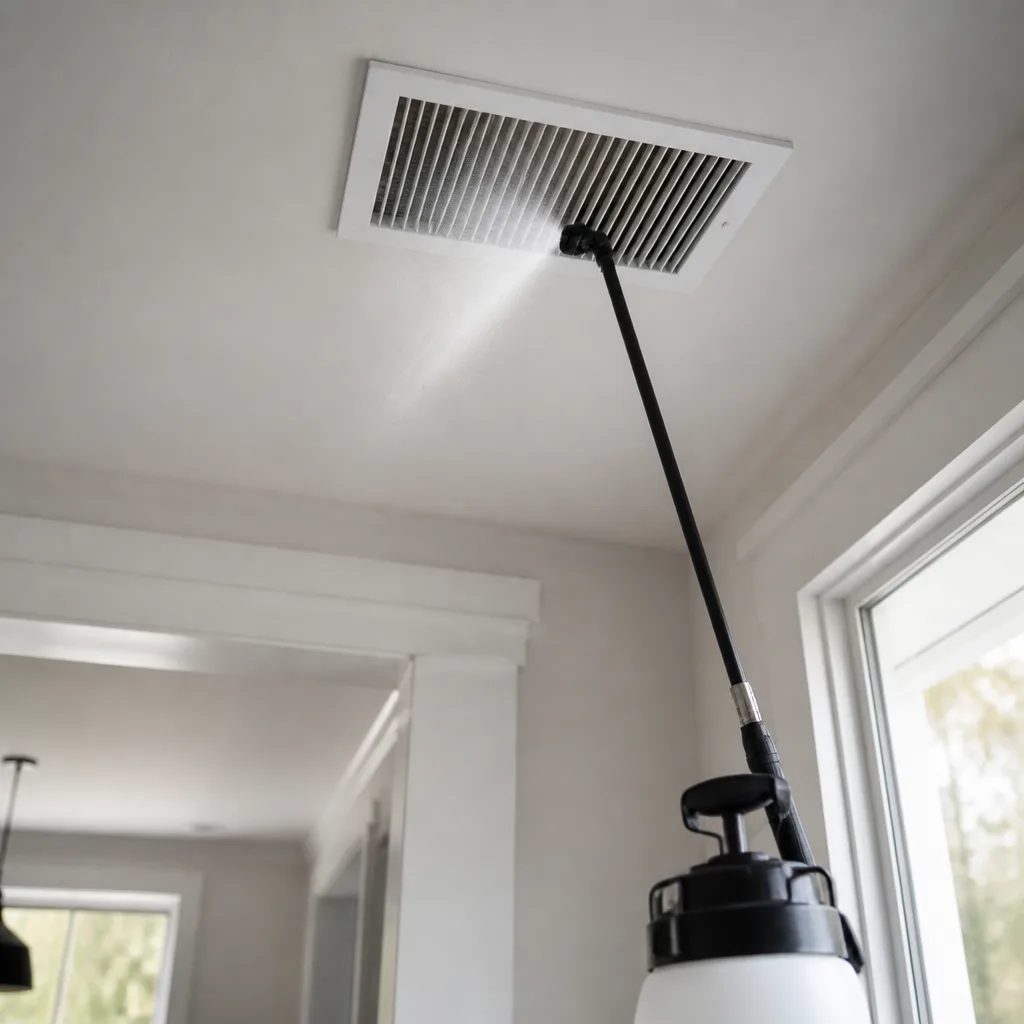
Whole-system duct and dryer vent check with before-and-after photos - you see exactly what came out of your vents
That "$99 whole-house special" is a bait ad - the real number appears once they are in your hallway, or the "clean" is a shop-vac at the register. We photograph the inside of your ducts before and after instead.
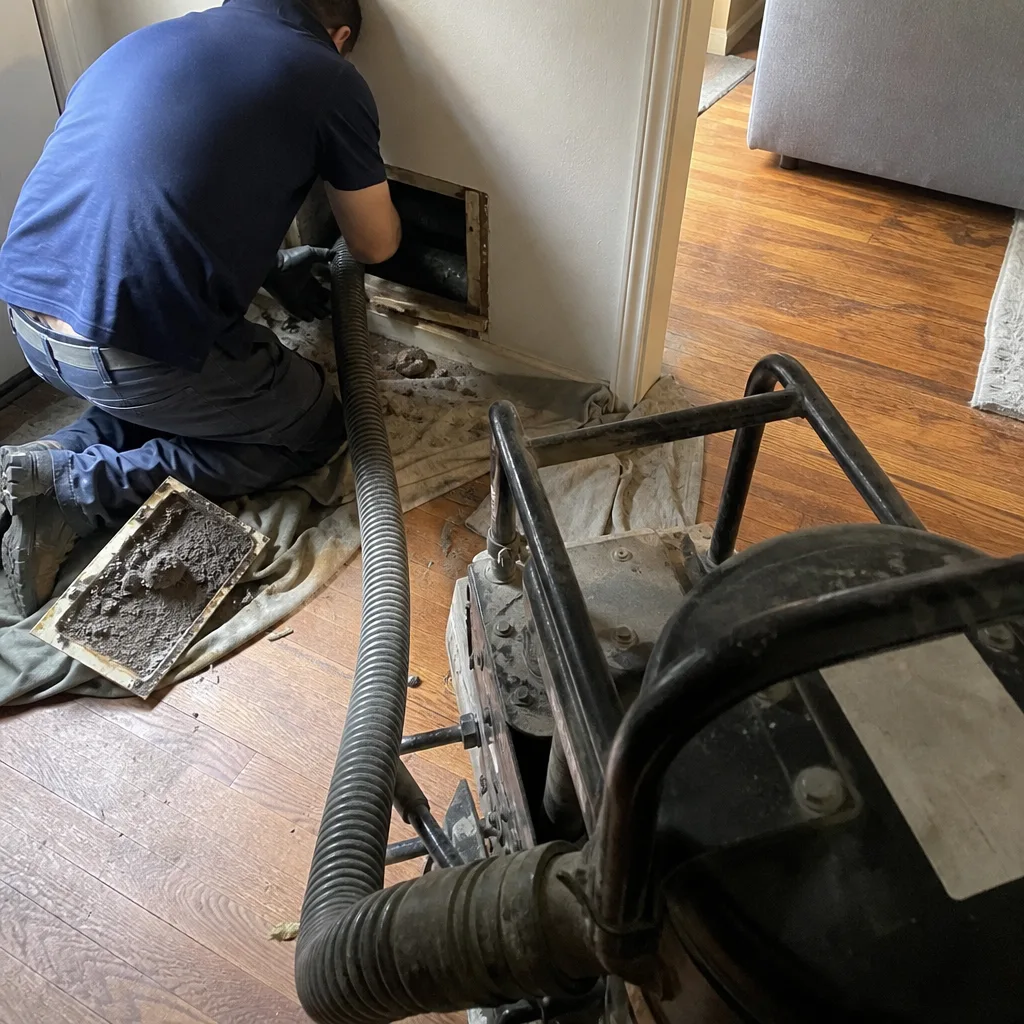 Before
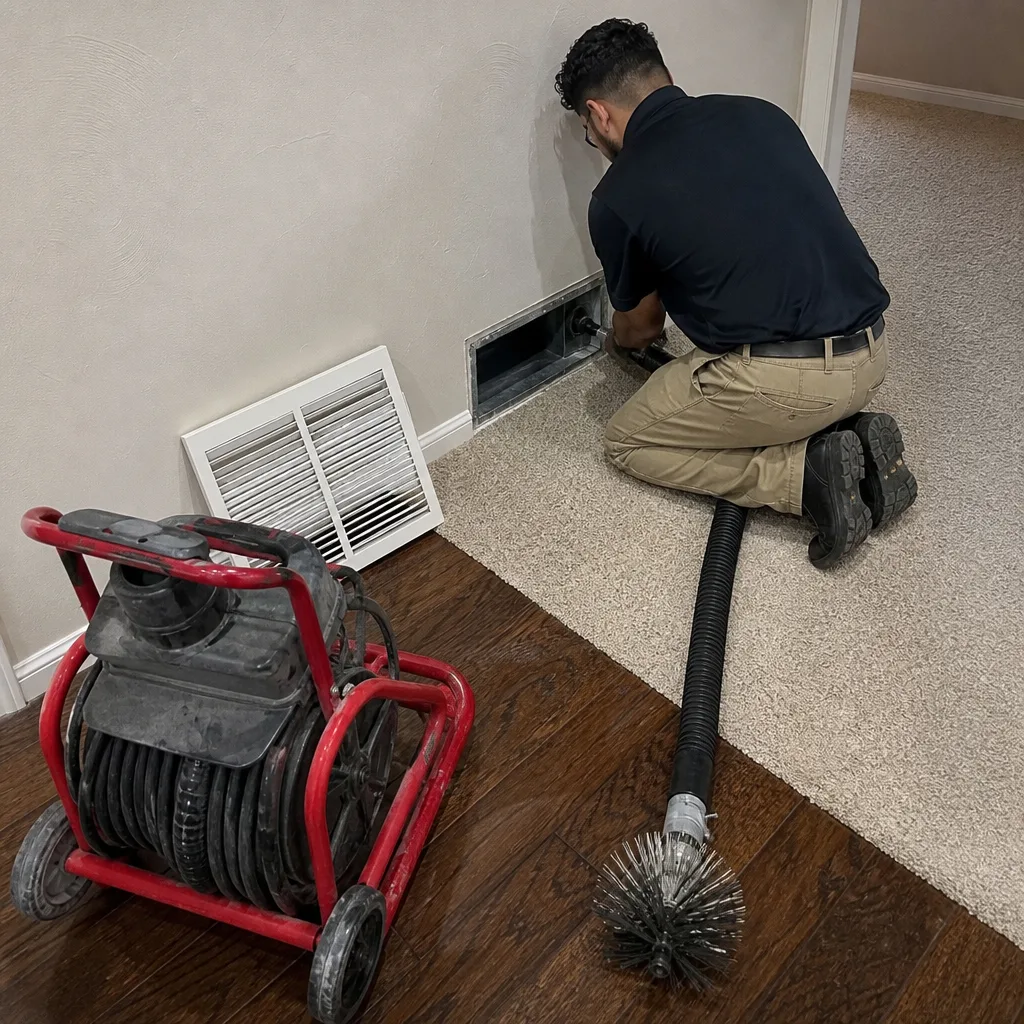 After
After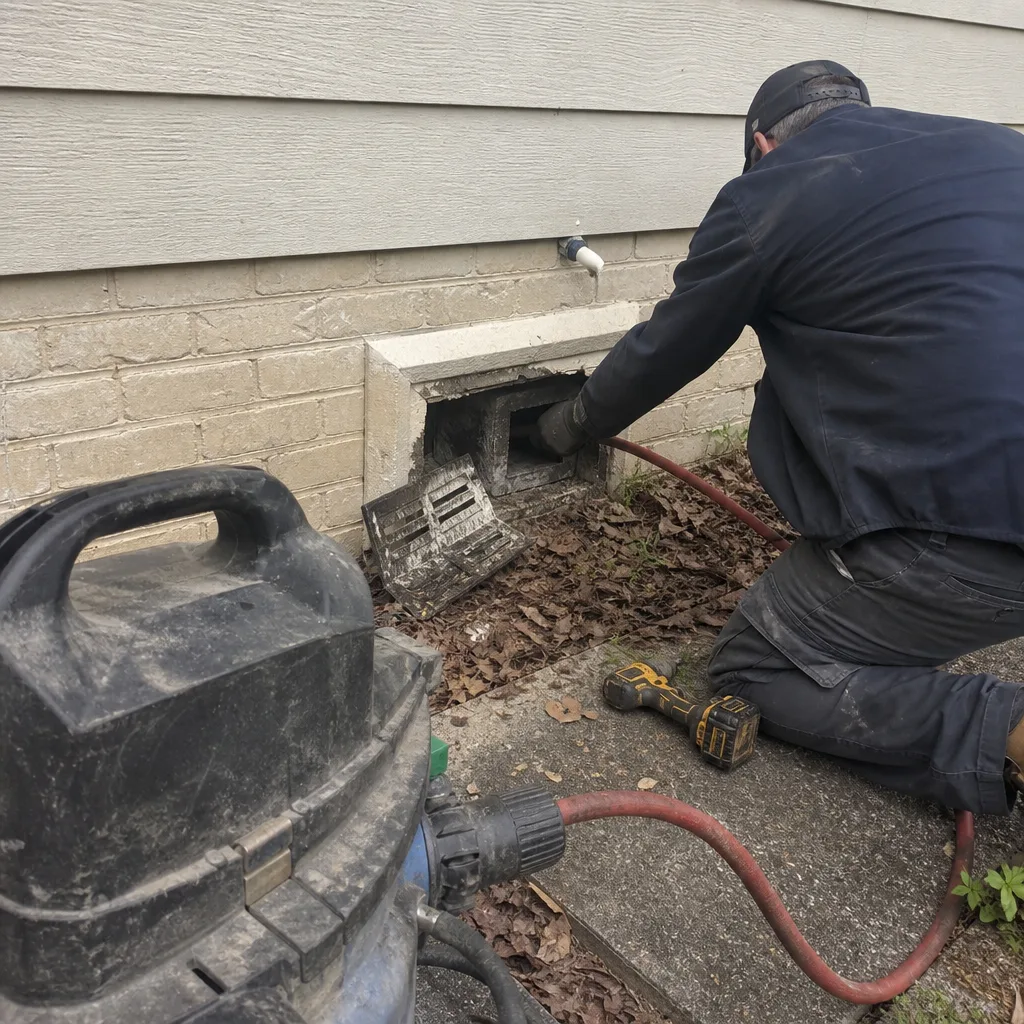 Before
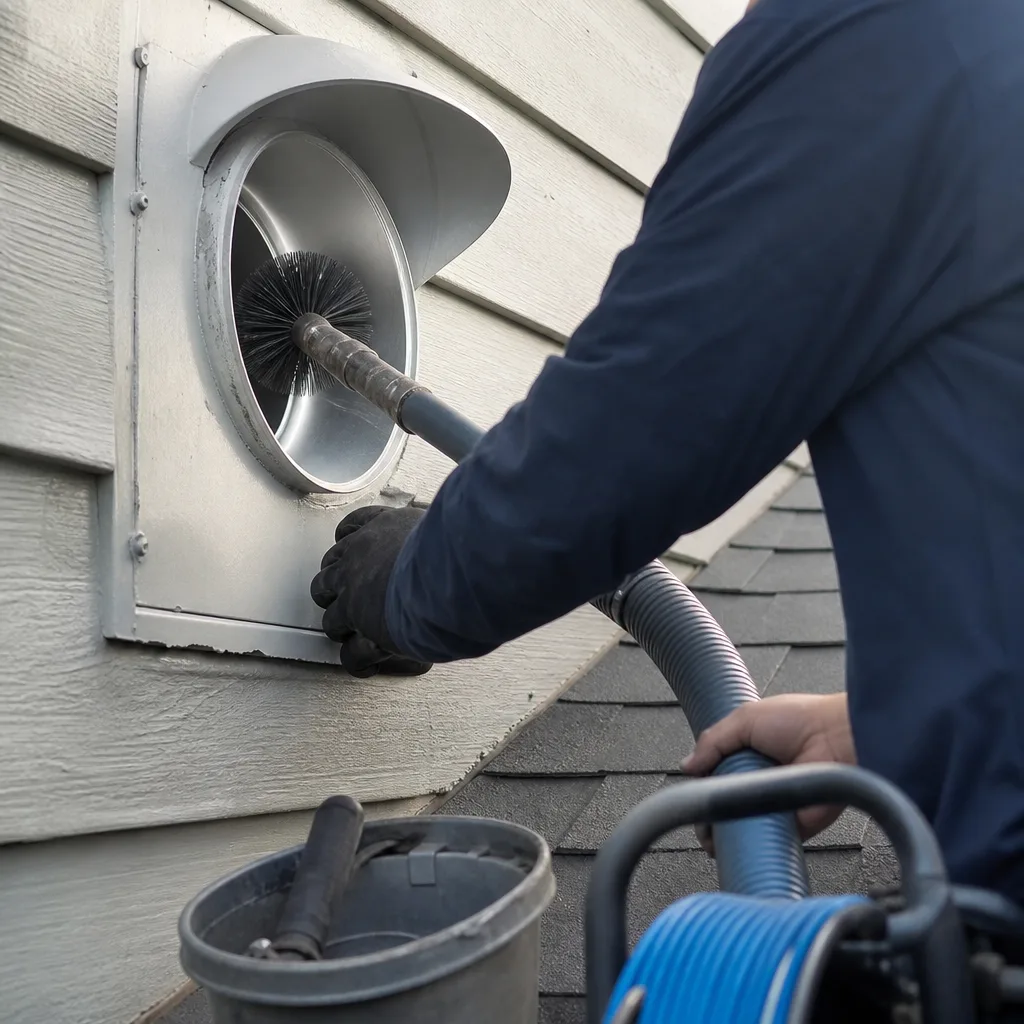 After
After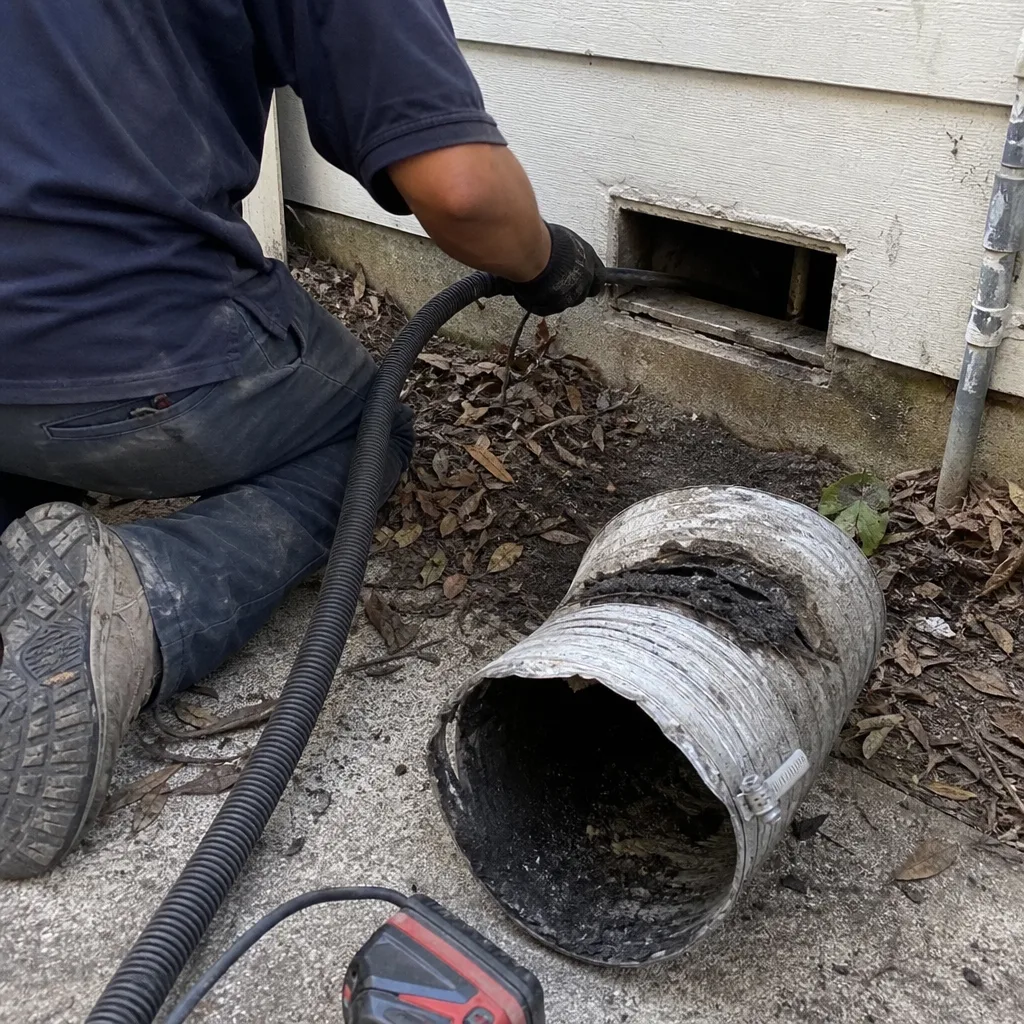 Before
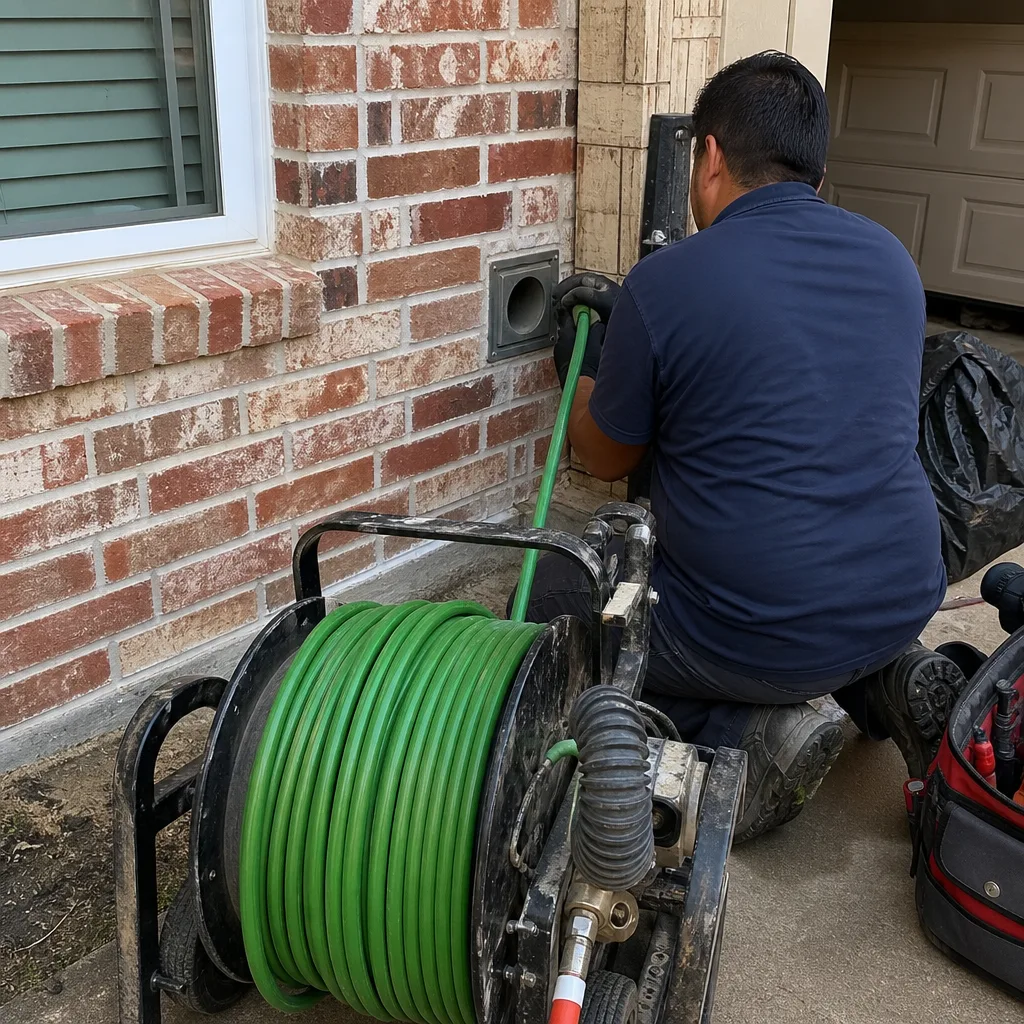 After
AfterAir Duct Cleaning Warning Signs: A Sugar Land Homeowner’s Reference Guide
Visible dust on your supply registers is one of the least reliable indicators that your ducts need cleaning. In our work across Sugar Land neighborhoods from Telfair to First Colony, we’ve found that register dust usually signals a filter problem, not a duct problem, and paying for cleaning without fixing the filter issue often makes things worse for a few weeks. This guide shows you how to tell the difference between symptoms that actually point to duct contamination and symptoms that indicate a different HVAC problem entirely, plus how to document what you find so you bring evidence to any Air Duct Cleaning services conversation.
Quick Answer
The most reliable warning signs your air ducts need cleaning are: debris visible inside the ductwork past the first bend, persistent musty odors that fade after the system runs, and reduced airflow at specific registers without corresponding filter issues. Dust on the outside of vents, frequent filter changes, or static electricity are poor predictors and often indicate equipment problems that duct cleaning won’t fix.
Table of Contents
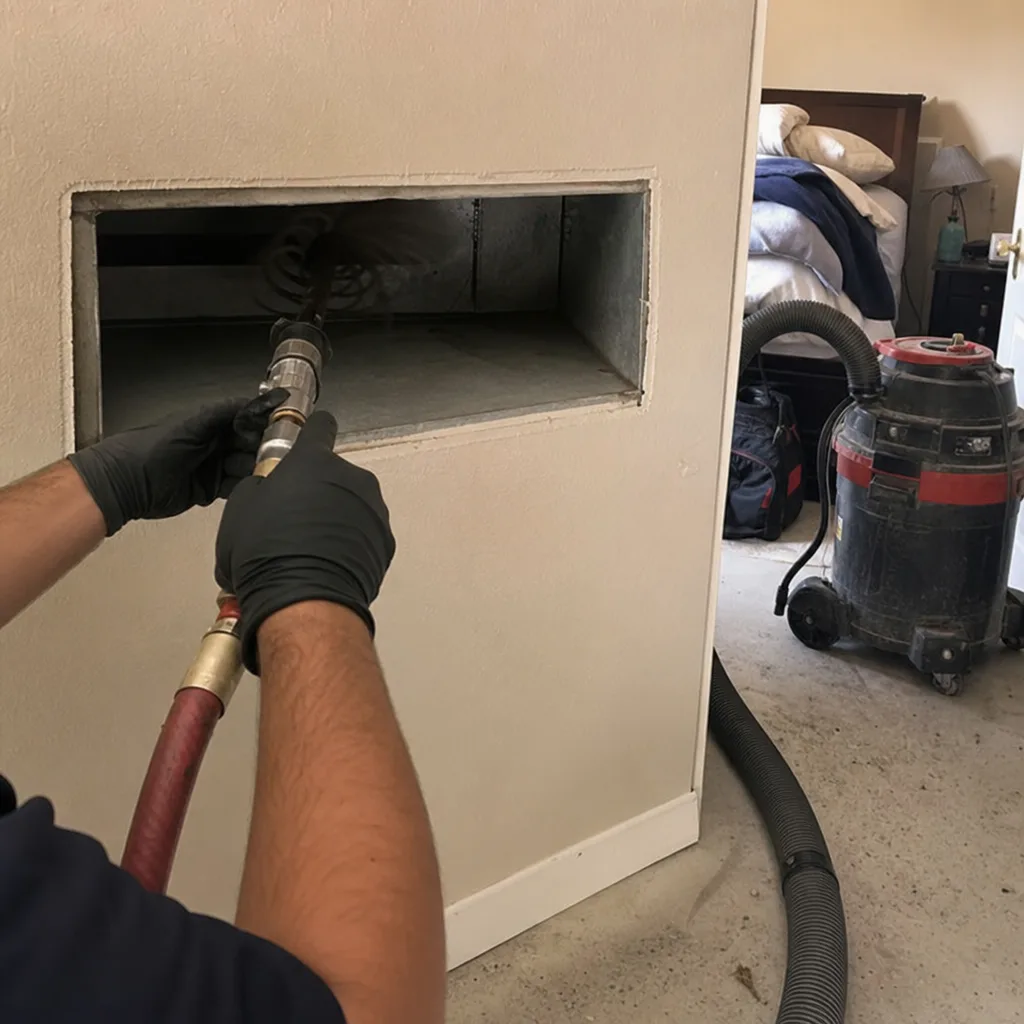
- Why Register Dust Is a Misleading Signal
- How to Inspect Your Own Ductwork
- The Real Warning Signs of Contaminated Ducts
- Sugar Land-Specific Contamination Triggers
- Three Signs That Mean Something More Serious
- How to Document What You Observe
- Common Mistakes to Avoid
- When to Call a Professional
- Frequently Asked Questions
BeforeAfterWhy Register Dust Is a Misleading Signal
Every week we field calls from Sugar Land homeowners who’ve noticed dust collecting on their supply registers and assume their ducts are filthy. The logic feels sound: dust comes out of the vent, therefore the duct behind it must be full of dust. But the physics of HVAC systems tells a different story.
Supply registers sit at the end of the duct run, the last stop for conditioned air pushed by your blower. If dust is accumulating on the grille slats or the wall nearby, that dust is either bypassing your filter entirely or passing through a filter that is undersized, poorly sealed, or loaded past capacity. The dust isn’t coming from deep in the ductwork; it’s coming from your return side, through your filter gap, and out the nearest supply before it ever reaches the main trunk. Cleaning the ducts removes whatever loose debris is in the system, but it does nothing to stop new dust from bypassing the filter and reappearing within days.
We’ve photographed this exact scenario in Sugar Land homes near the Brazos River corridor, where new construction settling and older HVAC installations create perfect conditions for filter bypass. The homeowner sees register dust, calls for duct cleaning, pays for the service, and two weeks later the dust is back because the real problem is a 1-inch filter slotted into a 4-inch media cabinet with a cardboard adapter, or a filter rack that was never sealed to the return plenum during original construction.
The correct response to register dust is to inspect your filter fit first. Remove the filter and check whether light leaks around the edges when it’s seated. Check the filter slot for gaps or collapsed cardboard. If you’re using a 1-inch pleated filter in a system designed for a 4-inch media, you’re getting bypass no matter how often you change it. Fix the filter problem, then reassess in 30 days. If dust persists after proper filtration, then duct contamination becomes a more credible explanation.
This distinction matters because air duct cleaning in Sugar Land runs $400-$900 for a typical residential system, and spending that money on a filter problem is poor triage. Our Haven Standard Clause 1 requires a written price before any work starts, but we also decline jobs where the symptoms point clearly to a non-duct issue, because a company that documents its work can’t afford to sell services that won’t show results in the photo record.
How to Inspect Your Own Ductwork
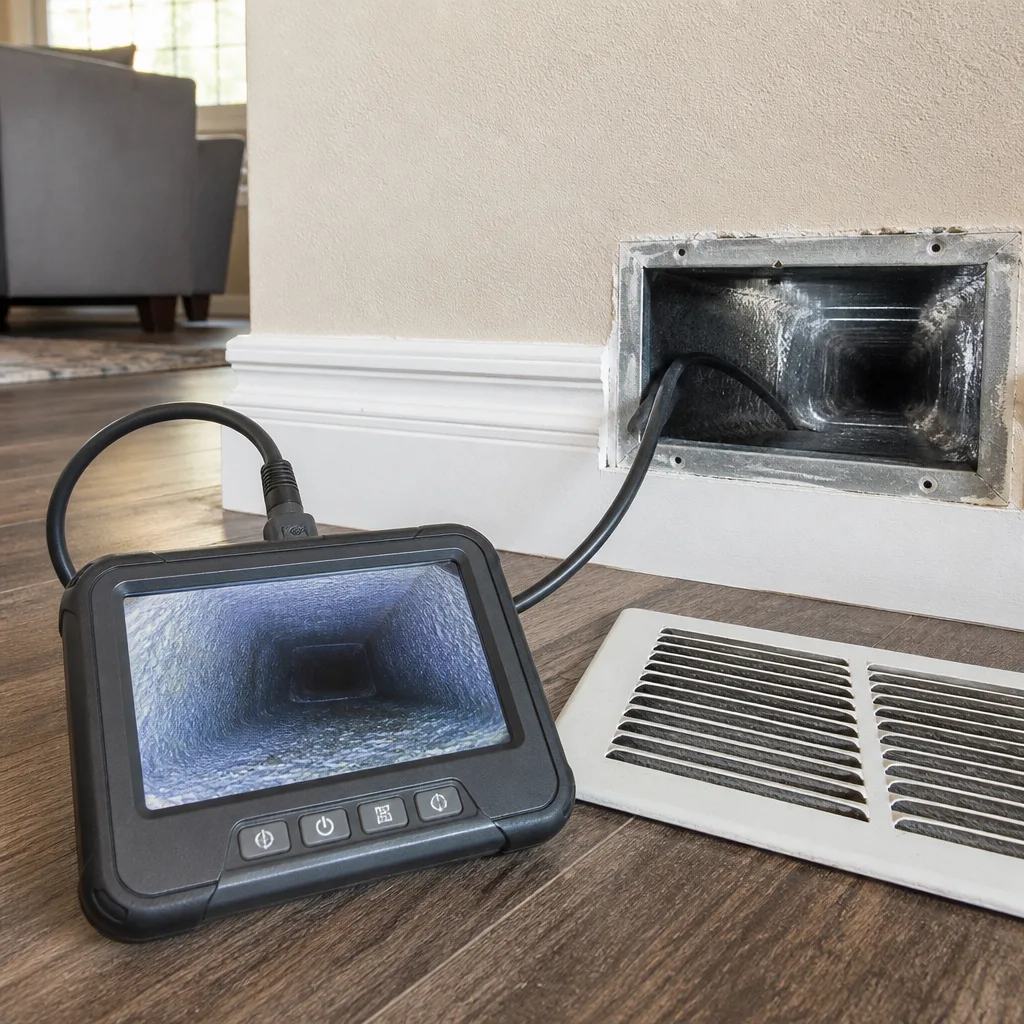
You don’t need contractor tools to get a credible first look at your ductwork. A flashlight and your phone camera are sufficient for a preliminary assessment that will either support or rule out professional cleaning. Here’s how to do it without damaging anything or voiding any warranty.
- Turn off your HVAC system completely. You want still air so debris isn’t moving when you look.
- Remove a return grille, not a supply register. Returns pull air in, so they show you what’s entering your system. Supplies push air out, so they only show you the end of the line. Returns are usually larger, often on walls or ceilings in common areas.
- Shine your flashlight straight into the duct. Look past the first 12 inches. The immediate opening often has normal household dust; what matters is whether debris continues deeper, especially at the first elbow or junction.
- Take photos with your phone. Hold the camera at the duct opening, use flash, and take multiple angles. Date-stamp the images in your phone settings or note the date separately.
- Repeat at a second return, ideally on a different floor or opposite side of the house. Single-location findings can be localized construction debris; patterns across multiple returns suggest system-wide contamination.
- Check your supply registers without removing them. Shine light through the slats and look for visible debris on the duct walls immediately behind the register. Limited dust here is normal; thick, fibrous buildup is not.
What you’re looking for: uniform gray dust coating, clumped or stringy debris, insect fragments, or visible moisture staining. What you’re not looking for: a few loose particles or a thin film that wipes away. A clean duct interior looks like bare galvanized steel or flex duct liner, not like the inside of a vacuum bag.
In Sugar Land’s newer developments, particularly around Riverstone and Imperial, we’ve found that return ducts in homes built 2015-2020 often contain construction debris that was never fully evacuated before occupancy. Drywall dust settles into a fine, pale coating that’s distinct from household dust, and it tends to accumulate at low points in the duct run where the blower’s airflow is weakest. Homeowners who photograph this and bring us the images get a more precise scope and price because we can estimate the contamination level before arriving.
If your inspection shows clear debris past the first bend, or if you can’t see far enough to assess, that’s credible evidence to bring to a contractor. If your returns look largely clear, your symptoms probably originate elsewhere.
The Real Warning Signs of Contaminated Ducts
After twelve years and 52,000 homes, we’ve identified five symptoms that consistently correlate with photographable duct contamination. These are not guarantees, but they’re strong enough indicators that further investigation is warranted.
1. Debris Visible at First Startup After Seasonal Change
When you first switch from heating to cooling or vice versa, a brief puff of visible particles from the registers is common. But if that puff contains identifiable debris, hair, or fibrous material, or if it lasts more than a few seconds, it suggests accumulated contamination being dislodged by changed airflow patterns. We documented this in a Sugar Land home near Sweetwater Country Club where the homeowner reported “confetti” coming from vents each October; the photo record showed a 2-inch layer of degraded fiberglass liner in the supply trunk, fragmented by years of thermal cycling.
2. Musty Odor That Fades After the System Runs
Odors that are strongest when the blower first starts, then diminish, typically indicate microbial growth on debris in the ductwork. The initial airflow disturbs the growth and releases volatile compounds; as the system runs, the air dilutes them. This is distinct from a persistent musty smell that doesn’t fade, which usually points to ongoing moisture intrusion or a contaminated evaporator coil, not the ducts themselves. HVAC cleaning in Sugar Land addresses coil and blower contamination; duct cleaning addresses the distribution network. The two are related but not interchangeable.
3. Uneven Airflow With Clean Filters and Open Dampers
If one bedroom is consistently warmer or cooler than others, and you’ve verified that your filter is clean, your dampers are open, and your blower is functioning, partial duct blockage is a credible explanation. We’ve found collapsed flex duct, dense debris dams at elbows, and in one Sugar Land case near Avalon, a child’s toy lodged in a return duct during construction that went undetected for six years. These obstructions reduce airflow downstream and create temperature stratification that no thermostat adjustment can fix.
4. Increased Dust Settlement on Horizontal Surfaces Near Returns
This seems contradictory to our register-dust warning, but the key is location. Dust near returns indicates that the return duct is pulling debris from somewhere it shouldn’t, or that the return duct itself is shedding contamination into the airstream before it reaches the filter. In homes with attic-mounted air handlers, we’ve photographed return leaks where attic insulation is being drawn into the ductwork, then distributed through the house. The dust settles near the return because that’s where the turbulent airflow drops its load.
5. Recent Renovation With Visible Drywall Dust in the System
Post-renovation contamination is photographable, documentable, and often severe. Drywall dust is extremely fine and bypasses standard filters easily. If your renovation included any wall or ceiling work and you didn’t isolate the HVAC system during construction, your ducts almost certainly contain meaningful debris. This is not a “maybe”; it’s a “when.” The question is how much and whether it’s distributed throughout the system or localized to the work area.
Each of these symptoms, when documented with photos and notes, gives a contractor something concrete to respond to. Vague complaints about “dusty air” or “allergies acting up” don’t.
Sugar Land-Specific Contamination Triggers
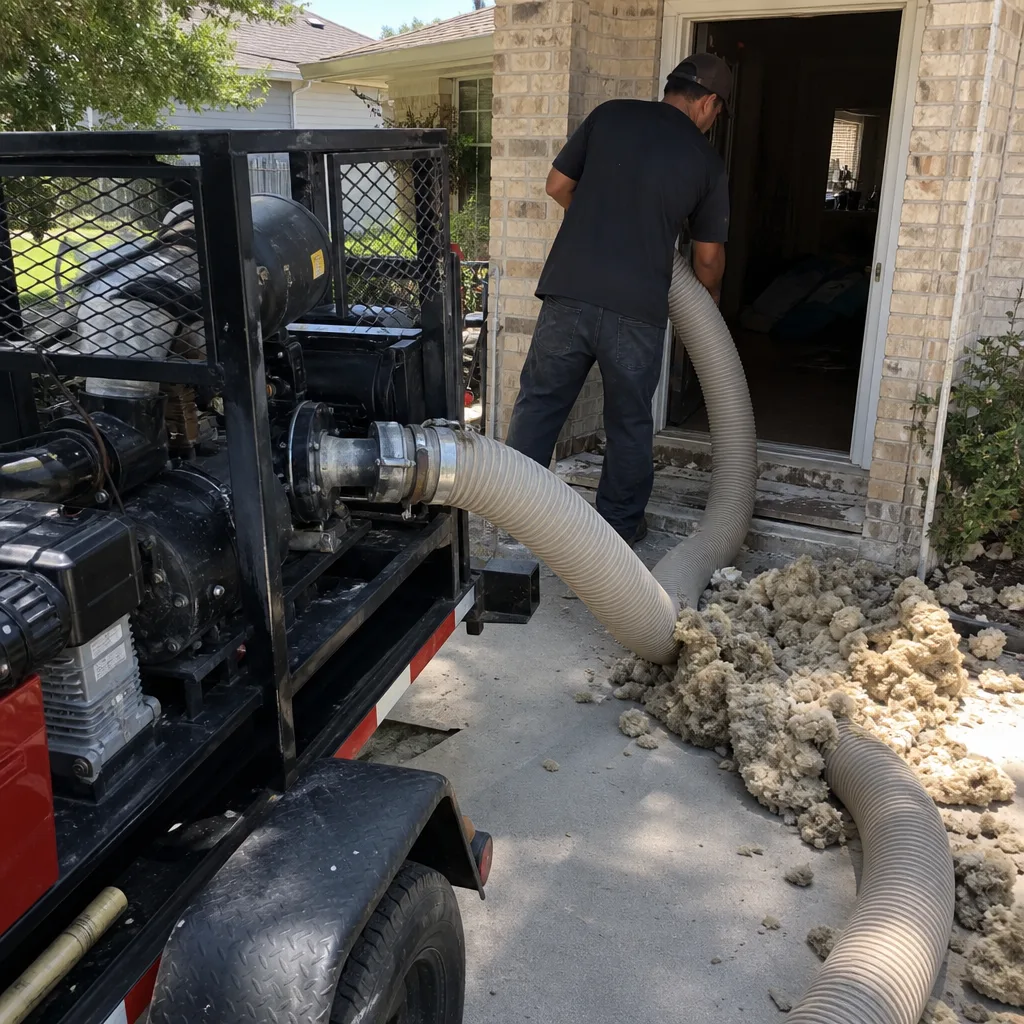
Geography and local building practices create contamination patterns that are predictable enough to mention specifically. Sugar Land homeowners should be alert to these triggers because they produce documented, photographable results that standard maintenance intervals may not address. For more guides & resources on identifying these patterns, see our blog.
Post-Renovation Drywall Dust
Sugar Land’s growth corridor, particularly west of Highway 6 and south of US 59, has seen extensive renovation activity as 1990s-2000s homes change hands. Drywall dust from even minor wall repairs is finer than household dust and penetrates standard 1-inch pleated filters. We’ve photographed return ducts in Riverstone and Telfair homes where the interior coating was uniformly pale gray, the signature color of gypsum dust, sometimes 1/4-inch thick at duct low points. This debris doesn’t respond to standard vacuuming because it adheres to metal surfaces electrostatically. Professional negative-pressure extraction with agitation, using equipment like Rotobrush or Nikro systems, is required to dislodge it. See The Complete Guide to Air Duct Cleaning in Sugar Land for a deeper breakdown of these methods.
Post-Storm Moisture Intrusion
Hurricane Harvey and subsequent severe weather events flooded or leaked into many Sugar Land attics and crawl spaces. Even where the living space stayed dry, return ducts in attics absorbed moisture through seams and connections, creating conditions for microbial growth on existing dust loads. The warning sign is a musty odor that appeared after a specific weather event and never fully dissipated. We’ve found that homes near the Brazos River floodplain, including parts of First Colony and Greatwood, show this pattern more frequently than elevated areas. The contamination is often localized to the lowest duct runs, where condensation pooled, and shows as dark staining or fuzzy growth in the photo record.
New-Construction Settling Debris
Homes built 2015-2025 in developments like Imperial, Aliana, and Candela often have ductwork that was installed before final interior finishing and never fully cleaned before occupancy. Construction debris includes wood chips, drywall fragments, insulation scraps, and occasionally fasteners or tape remnants. The symptom is a gradual increase in dust during the first 2-3 years of occupancy, often dismissed as “new house settling.” In our experience, this debris is concentrated at the first elbow or damper in each duct run, where airflow velocity drops and particles deposit. A homeowner who inspects at the two-year mark usually finds photographable accumulation that explains the dust increase.
High Humidity and Biological Growth
Sugar Land’s Gulf Coast humidity, typically 70-90% in summer months, creates conditions for biological growth in ductwork where moisture and organic debris coexist. This is not a cleanliness judgment; it’s physics. We’ve photographed active growth in systems where the homeowner maintained excellent filter discipline, because a small return leak in a humid attic introduced enough moisture to sustain growth on otherwise minimal dust. The warning sign is an odor that intensifies when the system cycles off and humidity rises in the ducts, then partially masks when dry conditioned air flows again.
Each of these triggers produces contamination that is identifiable in a photo record, locatable to specific duct sections, and responsive to professional cleaning when the scope is matched to the contamination type. Generic “whole house” cleaning without assessing these patterns is inefficient and sometimes ineffective.
Three Signs That Mean Something More Serious
Some symptoms that resemble duct contamination actually indicate structural or mechanical problems that cleaning alone won’t fix, and in some cases will temporarily mask. These three signs require a different response than standard air duct cleaning.
1. Flex Duct Collapse
Flex duct, the ribbed plastic-and-fiber tubing common in residential construction, can collapse internally if supporting straps fail or if excessive length creates sag. The symptom is dramatically reduced or absent airflow at specific registers, sometimes with a whistling or flapping sound. Cleaning a collapsed flex duct is pointless; the airway is physically blocked. The correct response is duct repair or replacement, often with rigid metal duct where the installation allows. Our crews carry Guardsman and Honeywell components for field repairs, and we document the collapse with photos before recommending replacement. Haven Standard Clause 2, Upfront Scope, requires us to distinguish repair needs from cleaning needs in writing before any work proceeds.
2. Disconnected Duct Runs
A supply duct that has separated from the main trunk, often in an attic or crawl space, dumps conditioned air into an unconditioned space and starves the intended room. The symptom is a room that never reaches temperature despite the system running continuously, sometimes with visible dust or insulation near ceiling penetrations. Like collapse, this is a mechanical failure, not a contamination issue. Cleaning the disconnected run doesn’t restore airflow; reconnecting and sealing it does. We use Aprilaire and Abatement Technologies sealing products for permanent repairs, and we photograph the disconnection before and after correction.
3. Biological Growth Requiring Remediation Protocol
Visible mold or suspected biological growth in ductwork requires assessment before cleaning. Mechanical agitation of active growth without containment can distribute spores throughout the house. If your inspection shows patchy or fuzzy growth, particularly in colors other than household dust gray, the response may need to include source moisture control, antimicrobial treatment with EPA-registered products, and post-cleaning verification, not just debris removal. CleanRun’s crews are trained to identify growth that exceeds cosmetic levels and to recommend appropriate remediation scope, documented in writing per Haven Standard Clause 1. We do not proceed with standard cleaning when growth conditions suggest a broader moisture or air quality issue.
These three conditions share a critical feature: they are all photographable, locatable, and require a written scope that differs from standard cleaning. A contractor who treats every symptom as a cleaning opportunity is not following evidence-based practice.
How to Document What You Observe
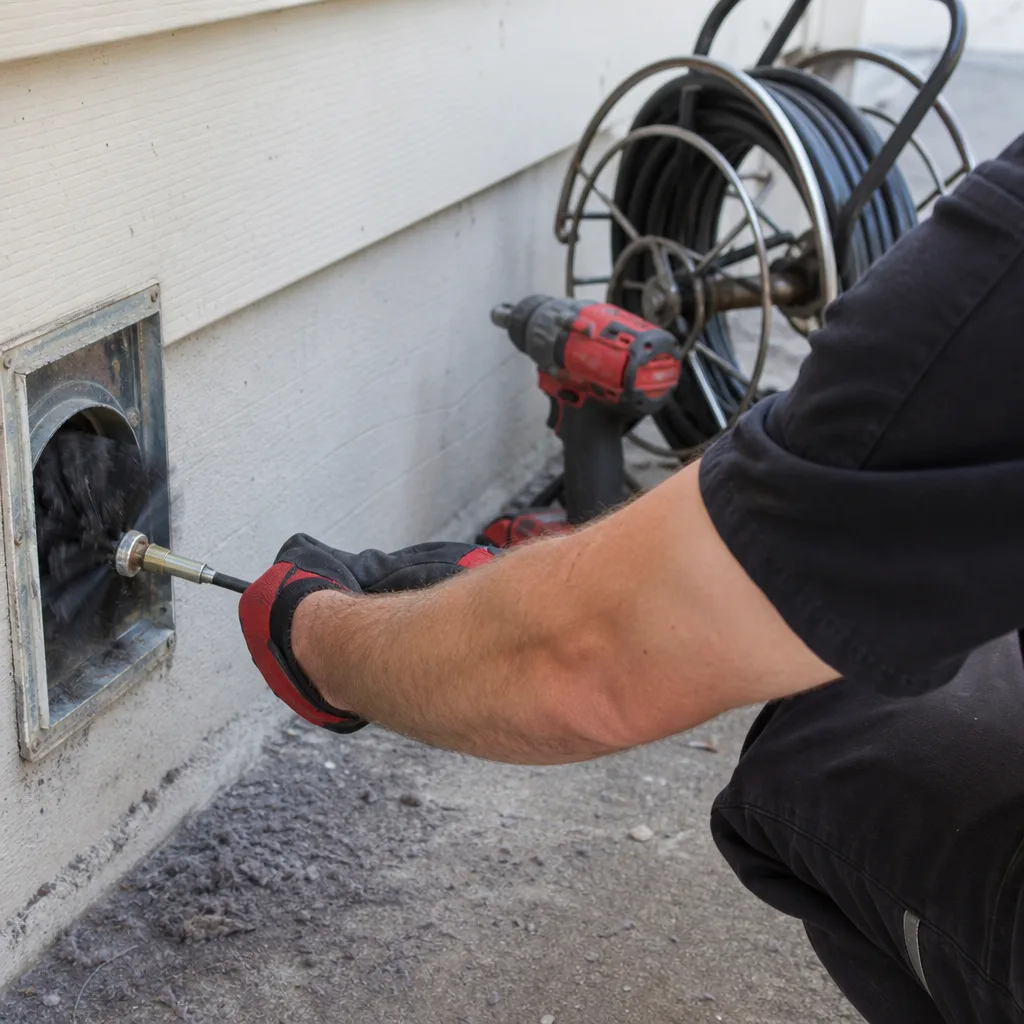
The most effective service calls we’ve handled in Sugar Land began with a homeowner who brought dated photos, specific odor descriptions, and a filter change log. This documentation transforms a vague complaint into a diagnostic conversation and protects you from both unnecessary services and incomplete ones. Here’s how to build a credible record.
- Photograph everything before you clean or move it. The return grille with dust on it. The filter as removed, with date visible. The duct interior at multiple depths. Any debris on horizontal surfaces. Date-stamp each image or maintain a dated folder.
- Keep a simple odor log for two weeks. Note time of day, weather conditions, whether the system was starting up or running steady, and how quickly the odor faded. Patterned entries are more useful than intensity ratings.
- Record your filter changes for six months. Brand, MERV rating, exact dimensions, date installed, date removed, and visual condition at removal. This establishes whether your filter practice is adequate for your system and contamination load.
- Note any recent events that could affect the system. Renovation dates, weather events, pest control treatments, new pets, or changes in occupancy. These provide context that explains timing.
- Request that any contractor add to your record, not replace it. Their before photos should confirm or contradict your findings. If they won’t show you photos of your specific ductwork before quoting, that’s a signal.
When you call CleanRun Air Duct Cleaning Sugar Land home at (346) 421-3357, we ask for this documentation upfront because it lets us scope the job accurately and quote a written price that won’t change. Homeowners who bring photos typically get more precise quotes and faster service because we’ve eliminated the discovery phase.
Common Mistakes to Avoid
- Treating register dust as definitive proof of dirty ducts. As covered above, this is usually a filter bypass issue. Fix filtration first, reassess in 30 days, and spend the cleaning budget only if symptoms persist.
- Accepting a phone quote without inspection. Square footage pricing assumes average contamination, but Sugar Land homes range from pristine new construction to Harvey-impacted systems with layered debris. A written price requires looking at the specific system.
- Scheduling cleaning after renovation without verifying HVAC isolation. If your contractor ran the system during drywall work, you need cleaning. If they isolated it properly, you may not. Ask before you assume.
- Ignoring musty odors that fade after startup. This pattern indicates active growth being disturbed by airflow, not just old dust. Fading odors are a warning sign, not reassurance that the problem is minor.
- Choosing a contractor who won’t provide a photo record. Without documentation, you have no verification that work was performed or that it addressed the specific contamination you observed. CleanRun has delivered a Documented Photo Record on every visit since 2013 because accountability requires evidence.
- Confusing duct cleaning with coil or blower cleaning. These are separate services with separate equipment access points. If your symptoms are odor-based without visible duct debris, the evaporator coil or blower wheel may be the source. HVAC cleaning in Sugar Land addresses these components specifically.
- Waiting for “recommended” intervals instead of responding to symptoms. The NADCA’s general guidance of every 3-5 years assumes average conditions. Sugar Land’s humidity, construction activity, and storm history create conditions that may accelerate contamination. Inspect and respond to evidence, not calendars.
When to Call a Professional
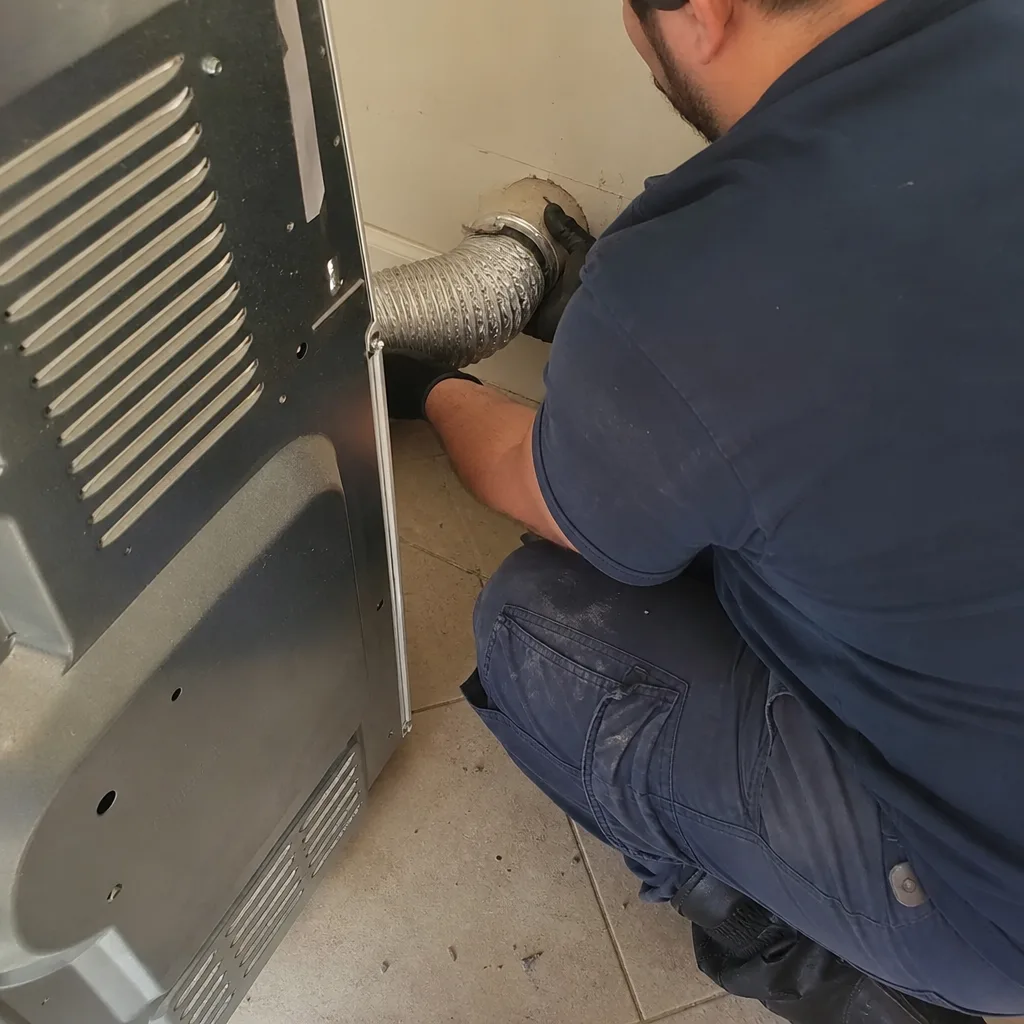
Call a professional when your documentation shows photographable debris past the first duct bend, when odors follow the startup-fade pattern, or when airflow reduction is localized to specific registers despite proper filtration. Also call when you’ve identified flex duct collapse, disconnected runs, or suspected biological growth, because these require repair or remediation scope beyond standard cleaning.
CleanRun Air Duct Cleaning Sugar Land offers free estimates in Sugar Land. Every estimate includes a written price before any work starts, every job concludes with a Documented Photo Record of every duct run, and every project is backed by our 365-Day Done Right Promise. Call (346) 421-3357 to schedule an inspection or bring us your documentation for a second opinion on any written estimate you’ve already received.
Frequently Asked Questions
Whole-system air duct cleaning for a typical Sugar Land home runs $400-$900 depending on system size, contamination level, and accessibility. Homes with multiple HVAC units, extensive flex duct in attics, or post-renovation debris at the severe end of the range. CleanRun delivers a written price before any work starts under Haven Standard Clause 1, with no per-vent add-ons or post-inspection upsells. Call (346) 421-3357 for an exact quote based on your specific system.
Low quotes typically rely on shop-vac equipment that doesn’t create negative pressure in the ductwork, limited register-level cleaning that doesn’t address trunk lines, or bait-and-switch pricing where the initial quote excludes “additional vents” or “heavy contamination” surcharges. A legitimate cleaning requires negative-pressure extraction equipment, typically from manufacturers like Nikro or Abatement Technologies, with agitation tools that contact duct surfaces. The photo record is your protection: ask any contractor to show you comparable before-and-after images from actual jobs, not stock photos.
Demand a documented photo record showing the inside of every duct run before and after cleaning, delivered as part of the standard job record. CleanRun has provided this on every job since 2013. Without it, you’re trusting a verbal report about invisible work. With it, you can verify that the specific debris you observed was removed and that no duct sections were skipped.
There’s no universal interval. Homes with no contamination triggers, proper filtration, and no symptoms may go 5-7 years without needing service. Homes with post-renovation debris, moisture intrusion history, or visible contamination need service when symptoms appear, regardless of elapsed time. In Sugar Land’s climate, we recommend inspection at the 3-year mark for homes built 2015 or later, and annual filter and return inspections for all homes.
Partially, and usually not effectively. A homeowner with a shop vac and brush can remove loose debris from register openings and the first few inches of duct. But negative-pressure extraction requires equipment that seals to the ductwork and maintains sufficient airflow to capture dislodged debris without releasing it into the living space. More importantly, flex duct damage, disconnected runs, and biological growth are not DIY-identifiable or fixable. We recommend self-inspection for documentation purposes, not self-treatment for contamination. Read DIY vs Professional Air Duct Cleaning: The Sugar Land Homeowner’s Decision Guide to understand when to call in the pros.
It can, if the allergy triggers are present in the ductwork and are removed by cleaning. It cannot help if the triggers are elsewhere in the home, or if the cleaning method doesn’t capture fine particles. We’ve had Sugar Land customers report reduced symptoms after documented removal of dense dust and pet dander loads, and others who saw no change because their primary triggers were bedding, carpeting, or outdoor pollen infiltration. The photo record helps distinguish these cases before you spend money.
The Bottom Line
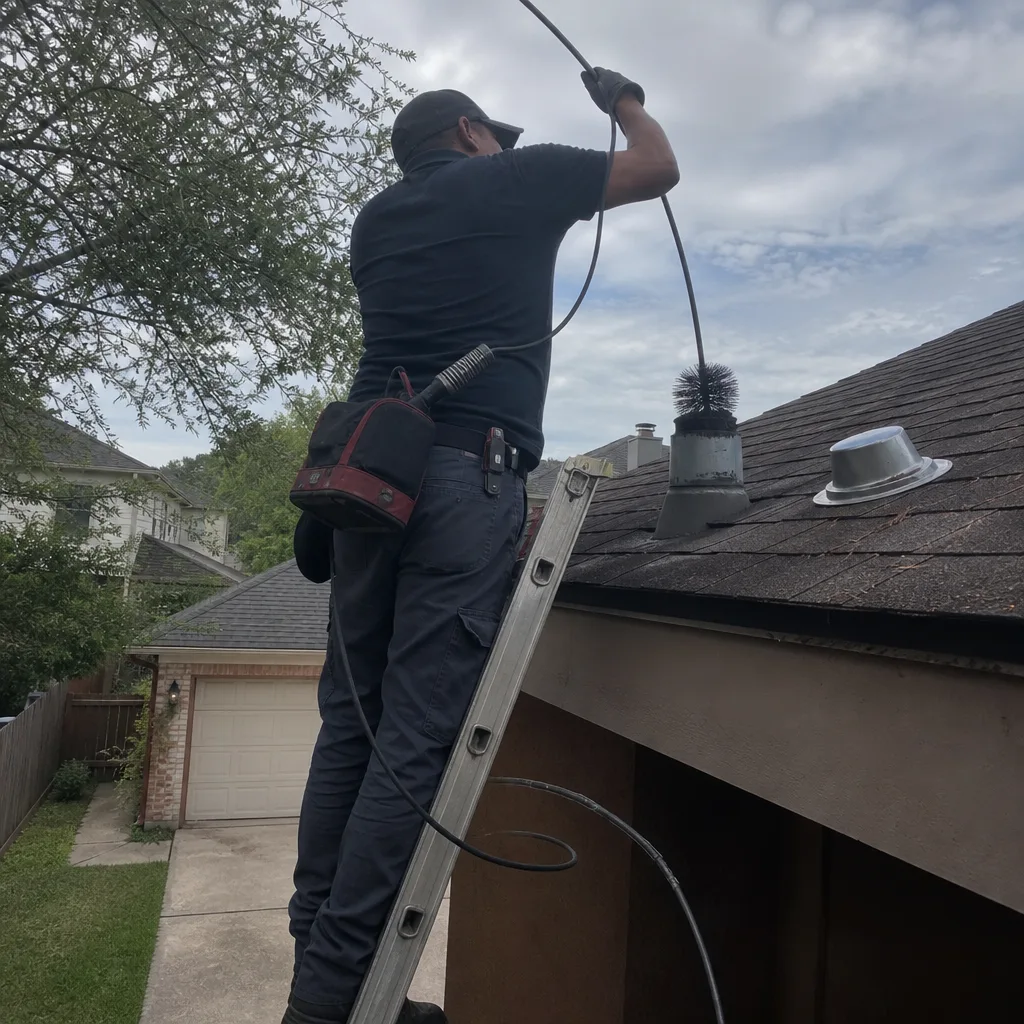
Accurate triage is the difference between solving a problem and paying for a service that doesn’t address it. Register dust usually means filter bypass. Musty odors that fade after startup mean growth or debris being disturbed. Uneven airflow with clean filters means obstruction or disconnection. Document what you observe with dated photos and notes, then bring that evidence to a contractor who responds with a written scope and price, not a phone quote and a hope.
CleanRun Air Duct Cleaning Sugar Land has served Sugar Land since 2013 with one practice on every job: written price first, documented photo record last, and accountability in between through the 365-Day Done Right Promise. If your inspection shows something worth a professional look, call (346) 421-3357 for a free estimate.
Written by Tomas Reyes, Owner at CleanRun Air Duct Cleaning Sugar Land, serving Sugar Land since 2013.