
Last updated September 23, 2026
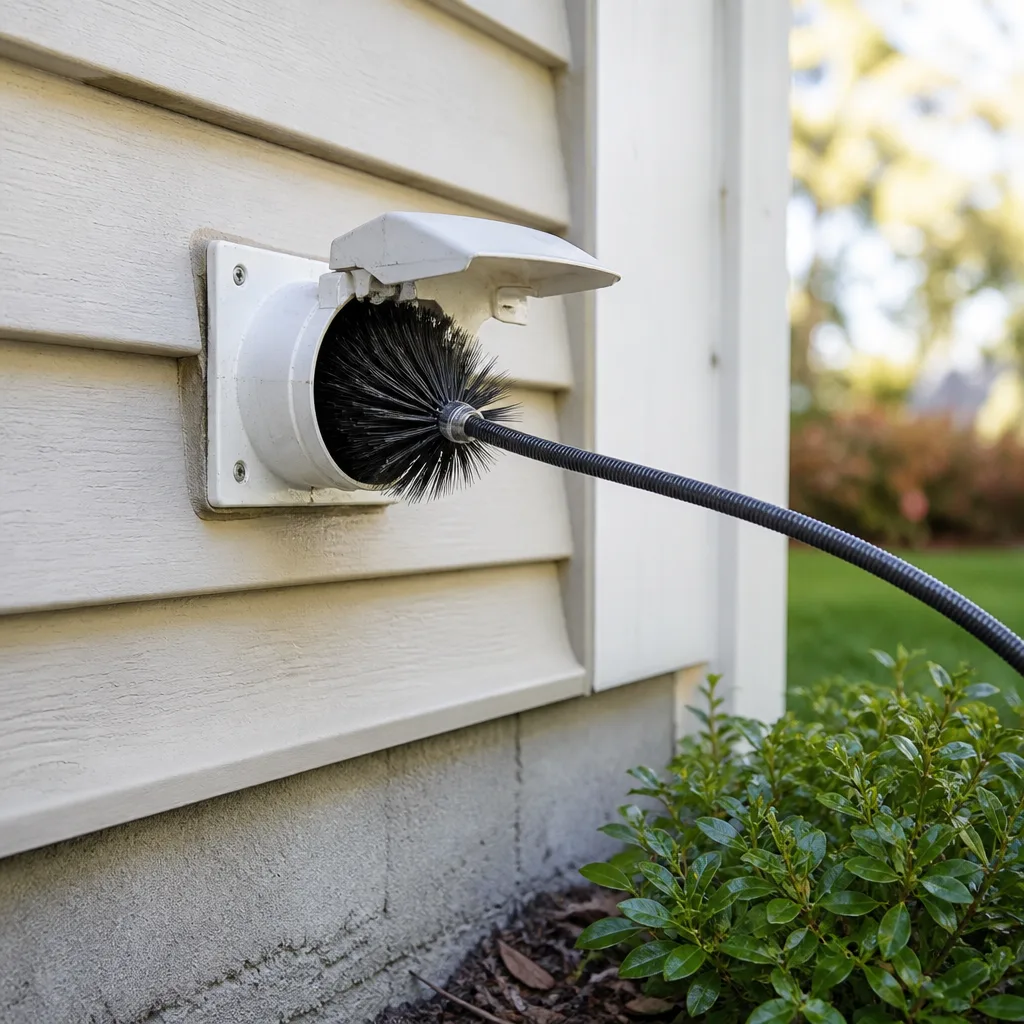
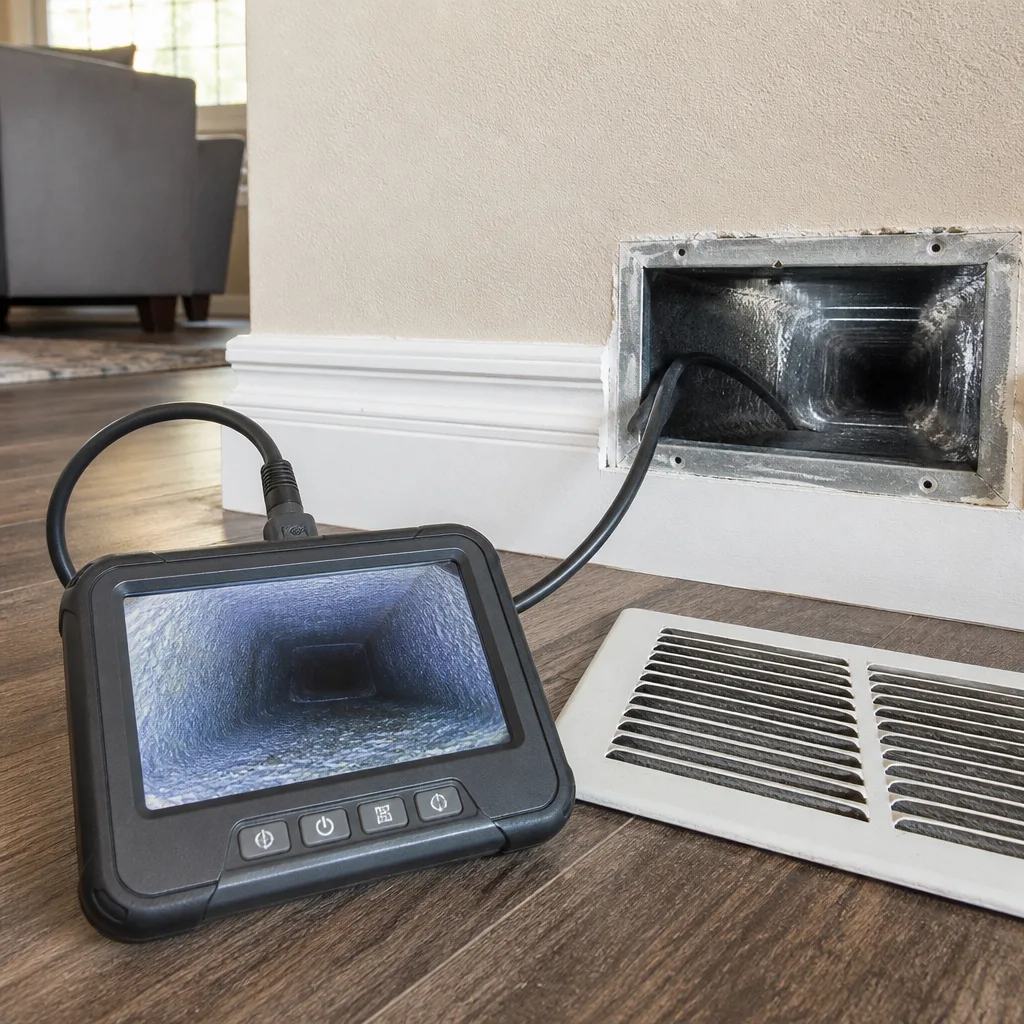
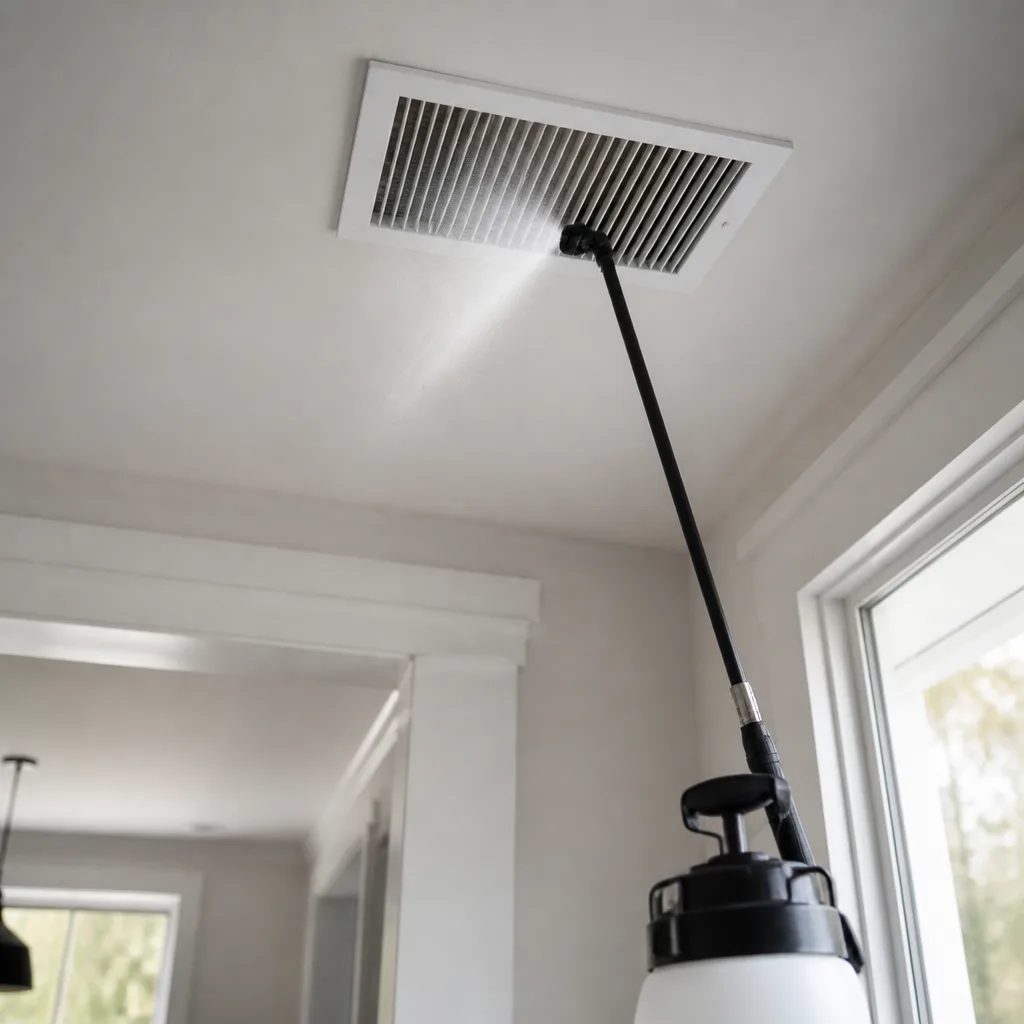
Whole-system duct and dryer vent check with before-and-after photos - you see exactly what came out of your vents
That "$99 whole-house special" is a bait ad - the real number appears once they are in your hallway, or the "clean" is a shop-vac at the register. We photograph the inside of your ducts before and after instead.
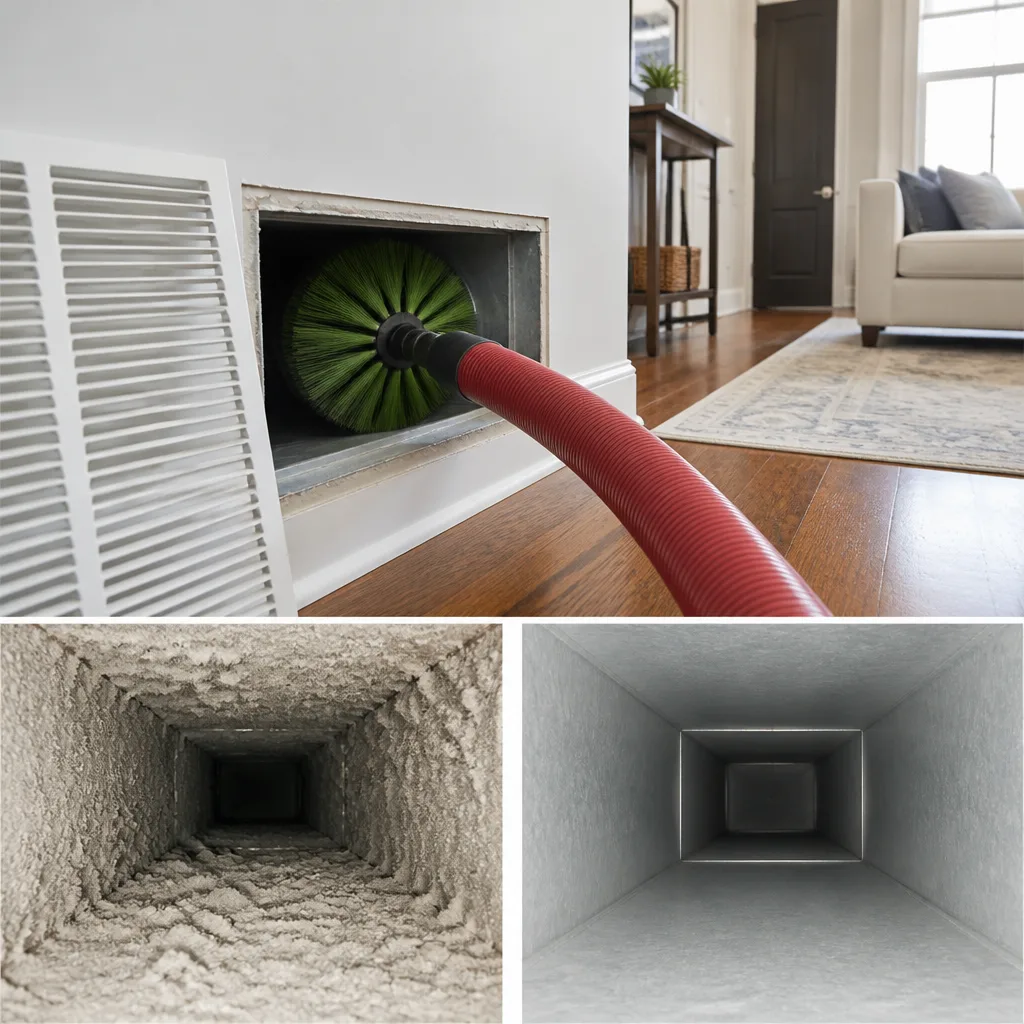
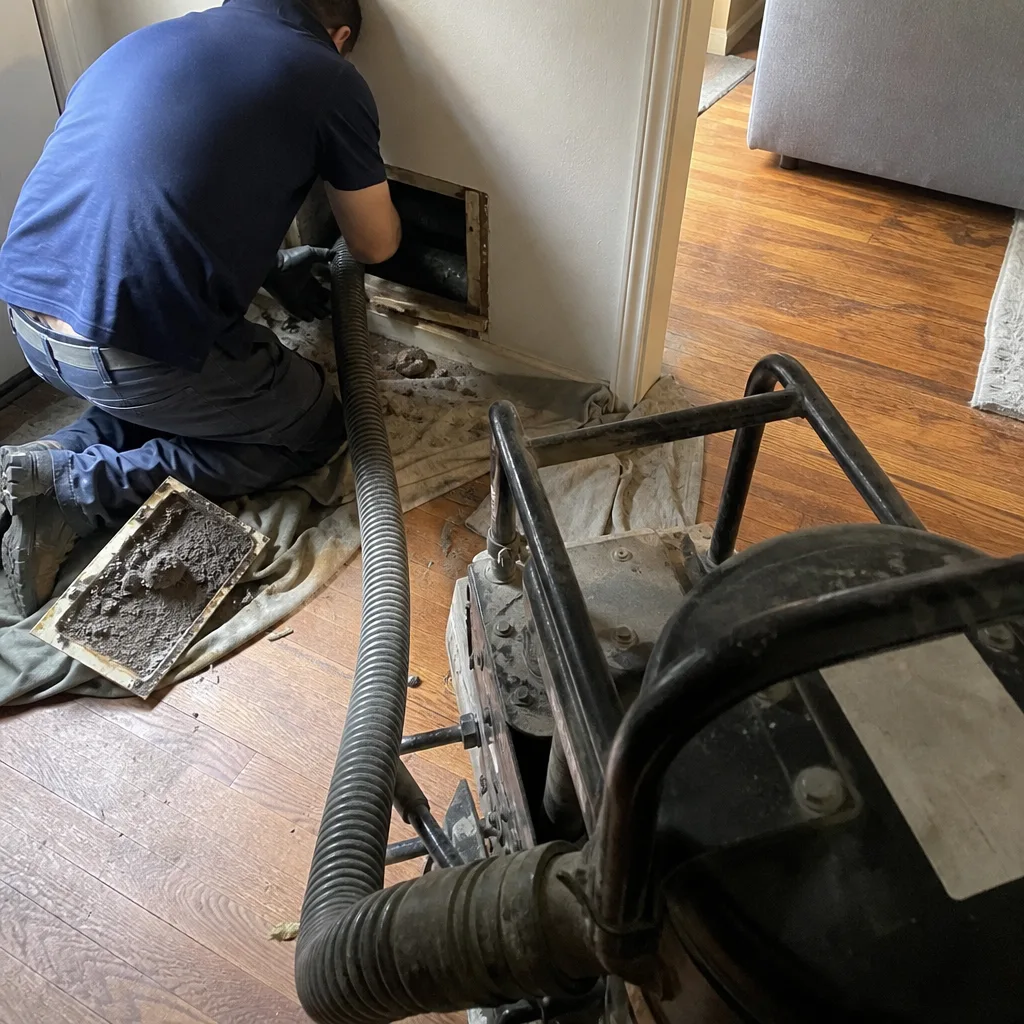 Before
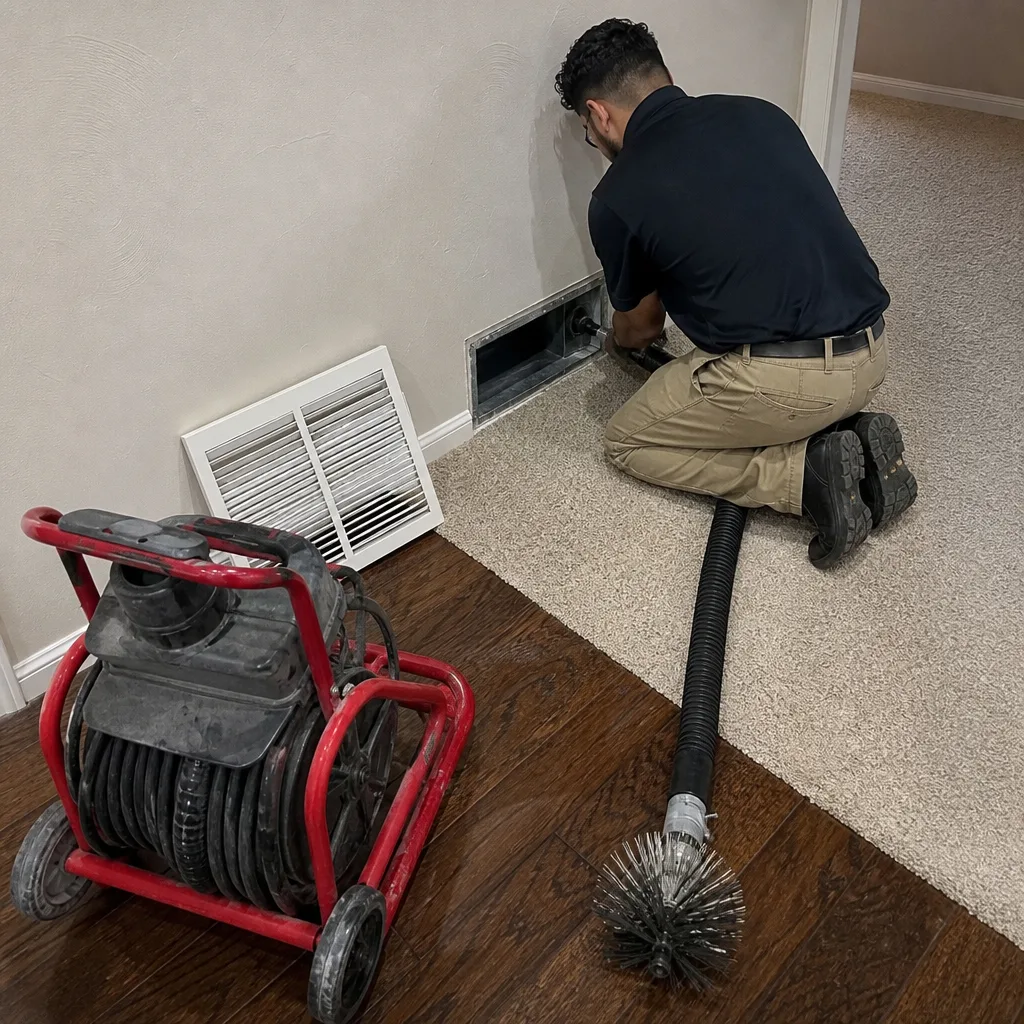 After
After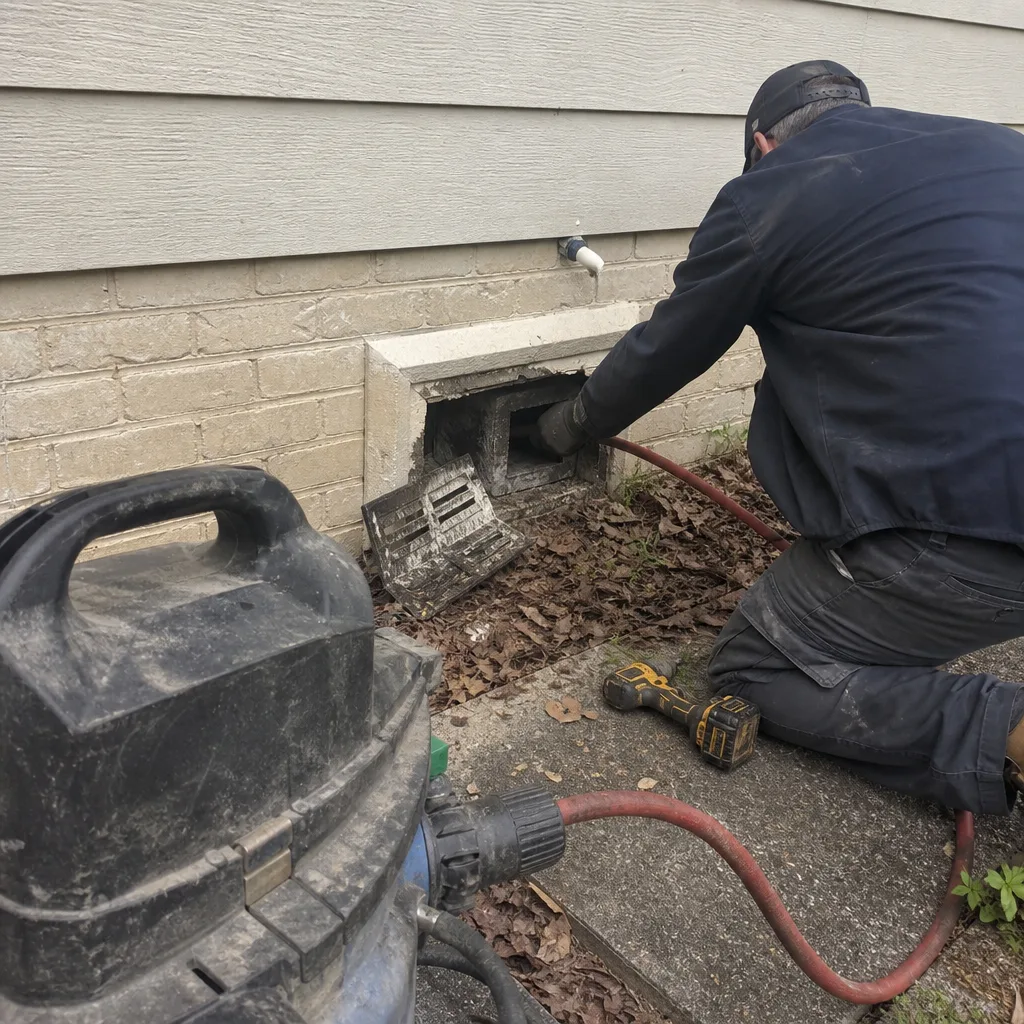 Before
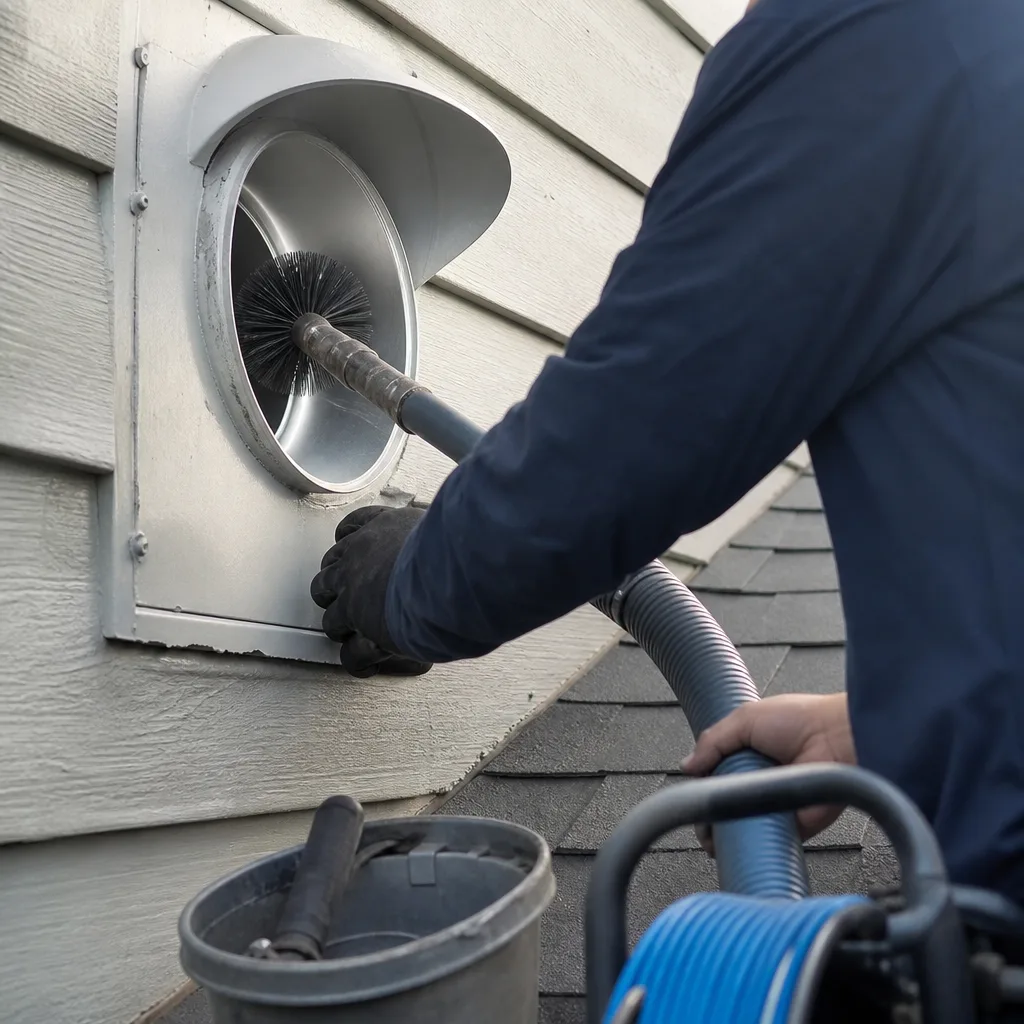 After
After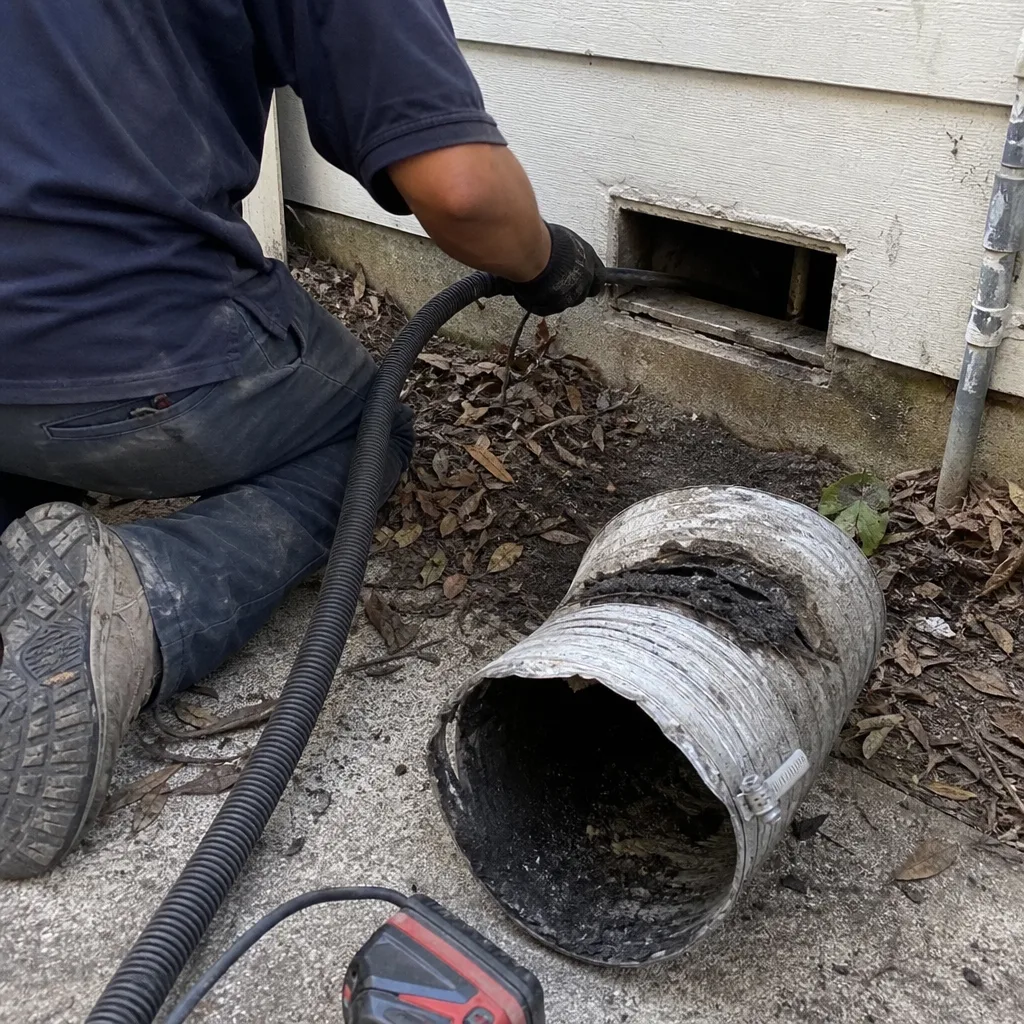 Before
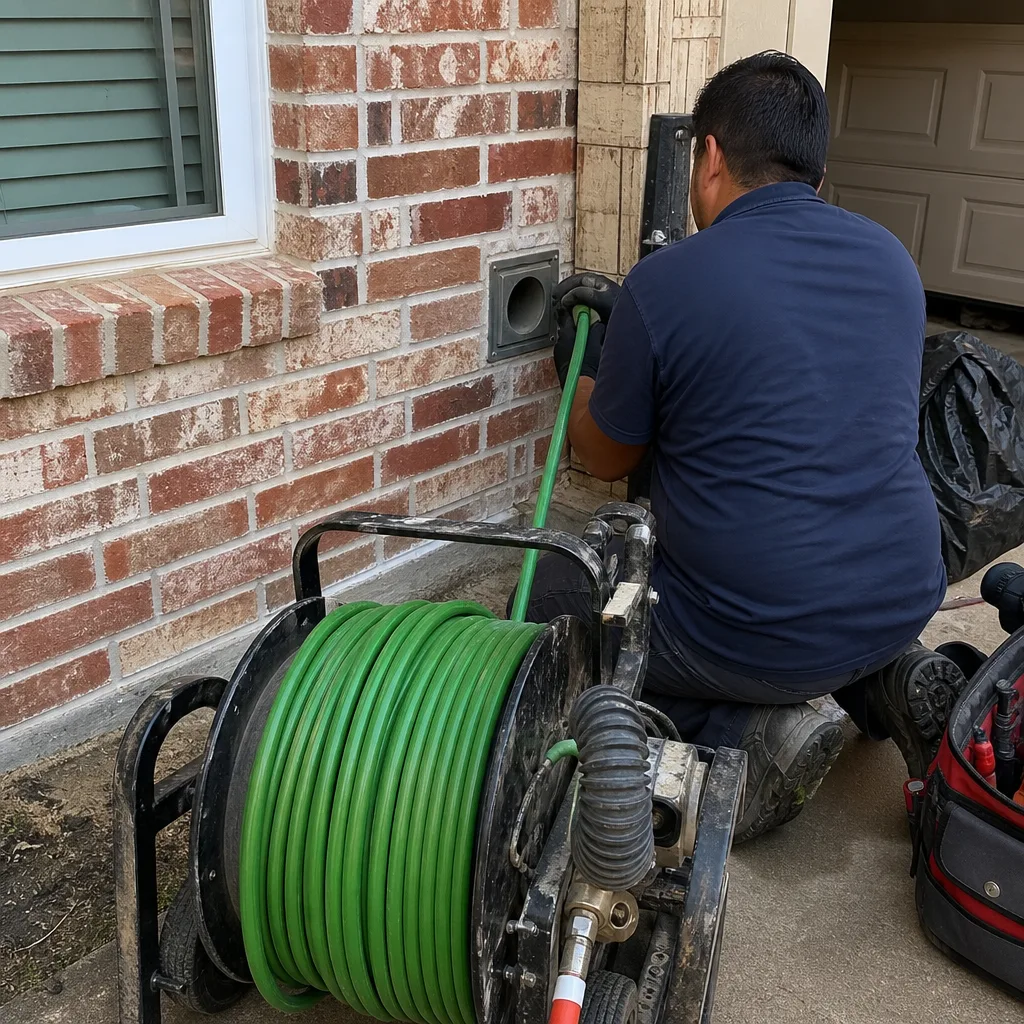 After
AfterAir Duct Cleaning Permits, Codes & Inspections in TX: What You Need to Know
Texas has no statewide residential duct cleaning license requirement, which means the person cleaning your ducts in Sugar Land may hold less regulatory certification than the person cutting your hair. That gap matters because duct cleaning rarely happens in isolation. Once a technician opens a plenum, the sealed box that distributes air from your HVAC unit, or cuts access to reach a buried duct run, the work can cross into territory Texas does regulate. We’ve been serving Sugar Land homes since 2013, and we’ve seen the confusion this creates at closing tables, after insurance claims, and when home inspectors flag work that lacked proper documentation. This guide-along with our Complete Guide to Air Duct Cleaning in Sugar Land-maps where Texas law actually draws the line, what standards fill the void, and how to protect your property record.
Quick Answer
Air duct cleaning itself does not require a permit or state license in Texas. However, duct repair, modification, or any work that penetrates structure, alters mechanical connections, or touches the air handler typically requires a TDLR-licensed HVAC contractor and may trigger local building permits in Sugar Land or Fort Bend County. NADCA ACR standards serve as the de facto quality benchmark where state law is silent.
Table of Contents
- The Texas Regulatory Gap: No License Required for Cleaning
- Where TDLR HVAC Licensing Kicks In
- When Sugar Land and Fort Bend County Require Permits
- NADCA ACR Standards: The De Facto Code
- What to Demand in Writing Before Work Starts
- Protecting Your Record for Resale and Insurance
- A Practical Hiring Checklist for Sugar Land Homeowners
BeforeAfterThe Texas Regulatory Gap: No License Required for Cleaning
Texas Occupations Code Chapter 1302 regulates HVAC contractors, not duct cleaners. The statute defines “air conditioning and refrigeration contracting” as the installation, repair, or modification of systems that control temperature, humidity, or air cleanliness. It does not mention duct cleaning as a licensed activity. This is not an oversight. The legislature simply never brought mechanical cleaning of existing ductwork under TDLR’s umbrella.
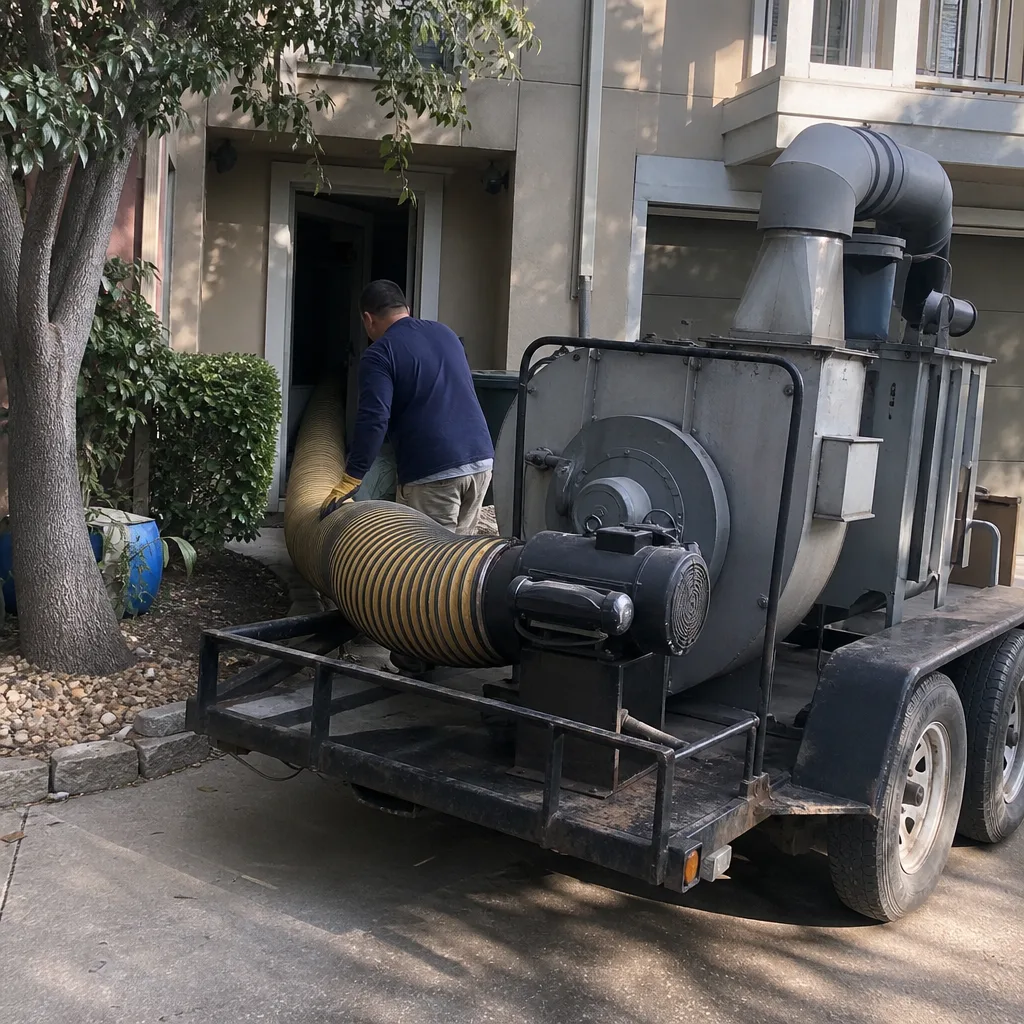
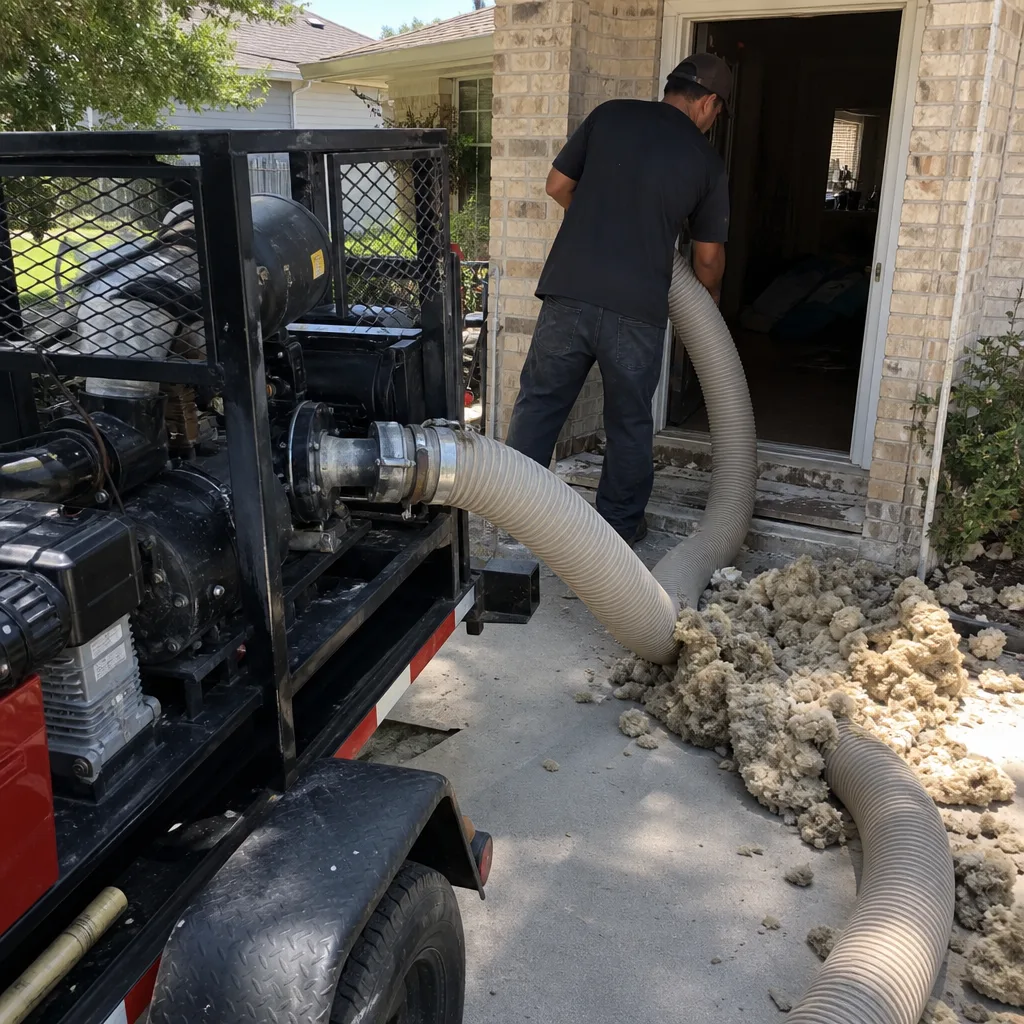
What this means practically: a company can legally operate in Sugar Land, advertise our Air Duct Cleaning services, and send technicians into your home with no state-mandated training, no continuing education, and no regulatory board to answer to. The barrier to entry is a vehicle and a portable vacuum. We’ve encountered competitors using equipment that amounts to a shop vac with a longer hose, charging prices that suggest professional-grade negative-pressure extraction.
The absence of licensing does not mean the absence of risk. Ductwork in Sugar Land homes built between 2015 and 2025, particularly in master-planned communities like Telfair, Riverstone, and Imperial, often uses flexible duct runs routed through conditioned attics with tight clearances. Improper cleaning technique-something we detail in our Air Duct Cleaning Warning Signs: A Sugar Land Homeowner’s Reference Guide-can collapse these runs, disconnect joints, or damage internal insulation. The technician who caused the damage may have no license to revoke and no bond to claim against.
Fort Bend County’s rapid growth has attracted operators who follow the construction crews. When new subdivisions age into their first duct cleaning cycle, typically years 5-8 in Sugar Land’s pollen-heavy climate, these companies blanket neighborhoods with coupon offers. The $79 price point is common. What the coupon does not disclose is that the actual scope, performed to any recognizable standard, costs substantially more. At CleanRun Air Duct Cleaning Sugar Land home, we publish written prices before work starts under Haven Standard Clause 1 because the alternative, a verbal estimate that shifts once the truck arrives, is exactly how this gap gets exploited.
Three things Texas homeowners should understand about this regulatory void:
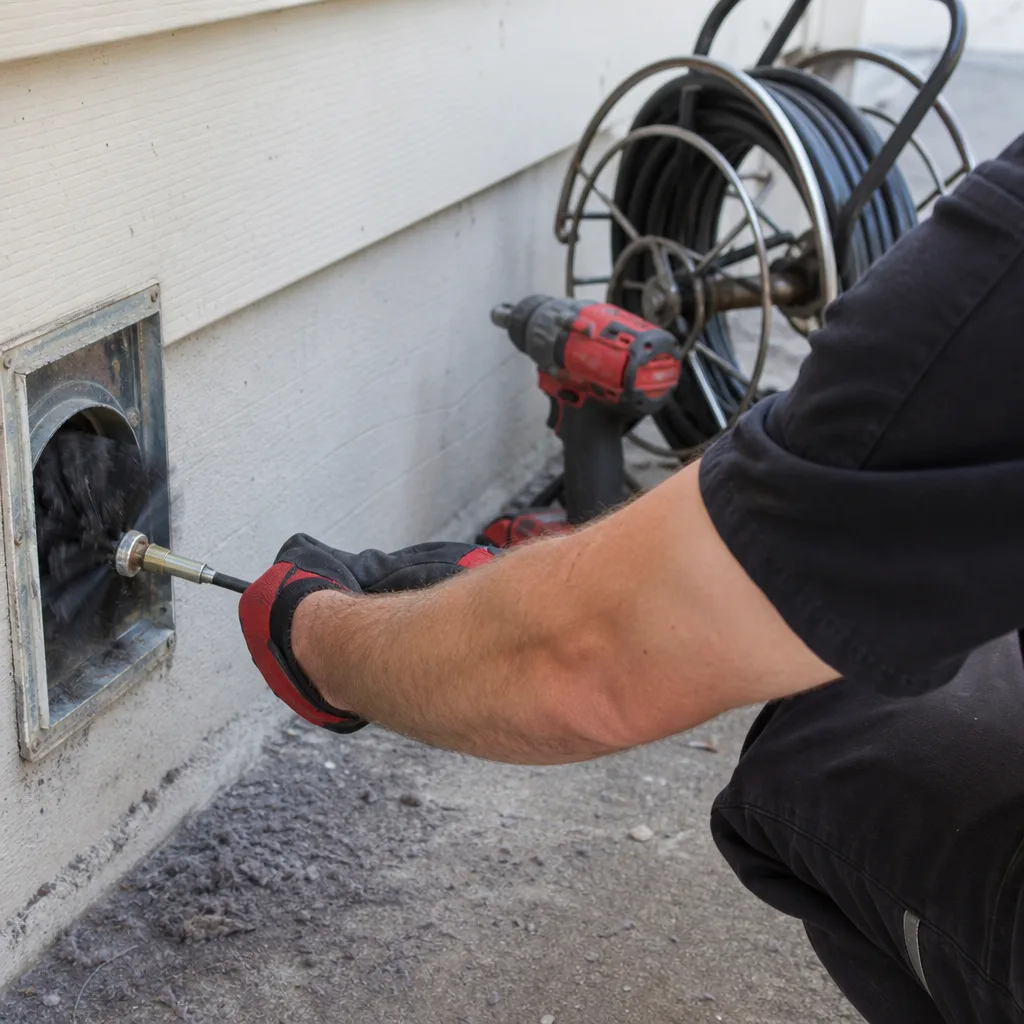
- No state agency verifies that a duct cleaner’s equipment actually works. A Rotobrush machine, a Nikro negative air unit, or a Guardsman containment system are recognizable trade tools, but their presence on a truck is not checked by any inspector.
- No state law requires before-and-after documentation. The photo record we deliver on every job, showing each duct run’s interior condition, is a CleanRun practice held since 2013, not a legal mandate.
- Insurance claims for duct damage caused by unqualified cleaners often fail. Homeowners policies typically exclude damage from unlicensed contractors when the work required a license.
Where TDLR HVAC Licensing Kicks In
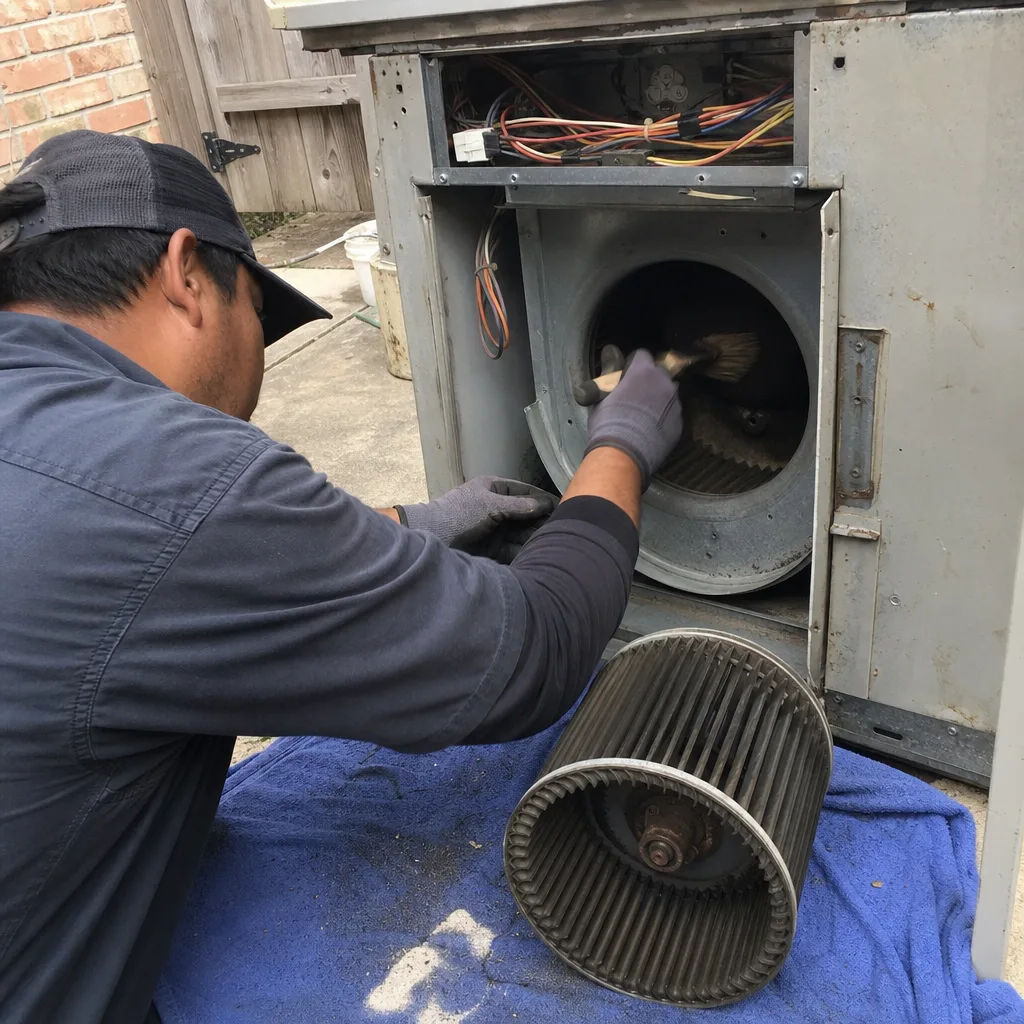
The line between unregulated duct cleaning and regulated HVAC work is clearer in statute than in practice. Texas Occupations Code Section 1302.002 requires a TDLR-issued contractor license for anyone who “installs, maintains, repairs, replaces, or services” an air conditioning or refrigeration system. The critical term is “system.” Once work affects the mechanical function of the HVAC unit or its integral distribution components, licensing applies.
Specific scenarios where a duct cleaner crosses into licensed territory:
- Opening the plenum. The plenum, the sheet-metal box attached directly to your air handler, is part of the mechanical system. If cleaning requires access through the plenum, or if the technician proposes modifications to improve airflow, that work falls under Chapter 1302.
- Sealing duct joints. Applying mastic or tape to reconnect separated ductwork is repair, not cleaning. In Sugar Land’s humid subtropical climate, where attic temperatures exceed 130°F in July, failed seals are common. The repair requires a licensed HVAC contractor.
- Relining or coating duct interiors. Products that seal duct walls from the inside, such as aerosolized sealants, alter the system’s airflow characteristics and are regulated as mechanical modifications.
- Any electrical disconnection. Removing power to the air handler to safely access ducts, if it involves breaker manipulation or wiring contact, requires electrical competency that TDLR-licensed contractors carry.
- Modifying register locations or sizes. Adding, removing, or resizing supply or return registers changes the engineered airflow of the system. This is design work, not cleaning.
We’ve responded to calls in Sugar Land’s First Colony and Greatwood neighborhoods where a “duct cleaning” appointment resulted in a disconnected plenum, a running system pulling attic air, and a homeowner facing an emergency HVAC repair. The original company had no license, no insurance specific to HVAC work, and a disconnected phone number. TDLR maintains a license lookup at its website; we recommend verifying any contractor who will touch components beyond the duct runs themselves.
The distinction matters for your property record too. Unlicensed HVAC work in Texas can trigger disclosure obligations at resale. The Texas Real Estate Commission’s Seller’s Disclosure Notice asks whether work was performed without required permits. A buyer’s inspector who finds fresh mastic on a plenum, with no permit or licensed contractor associated, can flag this as a material defect.
When Sugar Land and Fort Bend County Require Permits
Local jurisdiction adds another layer. Sugar Land operates under the Fort Bend County Unified Development Code and the International Residential Code with local amendments. Building permits are required for mechanical work that alters or installs HVAC equipment, modifies structural elements, or creates new openings in rated assemblies.
Specific permit triggers relevant to duct work:
- New duct runs or register locations. Any modification to the distribution system that requires cutting new openings in drywall, flooring, or structural members needs a permit. Sugar Land’s building department reviews these for compliance with energy code duct sealing requirements.
- Plenum replacement or modification. Replacing a rusted or damaged plenum, common in Sugar Land homes where condensate drainage has failed, is mechanical work requiring permit and inspection.
- Duct access panels in fire-rated assemblies. Many Sugar Land townhomes and condominiums, particularly in the Sugar Land Town Square area, have fire-rated walls or ceilings between units. Cutting access panels for duct cleaning without proper fire-stopping violates code and creates liability.
- Attic platform or walkway construction. Safe access to ductwork in Sugar Land’s steep-roofed homes sometimes requires temporary or permanent platform construction. Permanent platforms trigger structural review.
Fort Bend County’s unincorporated areas, including some pockets near Sugar Land’s extraterritorial jurisdiction, follow county building standards that are generally less stringent but still require permits for mechanical modifications. The practical difference: a job in Riverstone, within Sugar Land city limits, faces stricter inspection than an identical job in an unincorporated subdivision nearby.
CleanRun’s approach, shaped by Haven Standard Clause 4: Scope Clarity, is to identify during the initial assessment whether proposed work crosses into permitted territory. If it does, we document this in writing, explain the permit requirement, and either coordinate with a TDLR-licensed partner or refer the mechanical work separately. We do not perform permitted work without permits. The written price we provide before any work starts includes this determination, so there is no surprise midway through the job.
Sugar Land’s building permit fees for residential mechanical work typically run modest, but the inspection scheduling adds time. Homeowners planning work before a sale closing should account for this. We’ve seen transactions delayed when duct modifications, performed without permit, surface during the buyer’s inspection period and require retroactive compliance.
NADCA ACR Standards: The De Facto Code
Where Texas law is silent, industry standards fill the governance gap. The National Air Duct Cleaners Association publishes ACR, the Assessment, Cleaning and Restoration of HVAC Systems standard. NADCA ACR is not codified in Texas statute, but it functions as the recognized benchmark in litigation, insurance disputes, and professional accountability.
What ACR covers that Texas law does not:
- System assessment before cleaning. ACR requires visual inspection, typically through access panels or robotic camera, to document pre-existing conditions. This prevents disputes about whether damage occurred during cleaning.
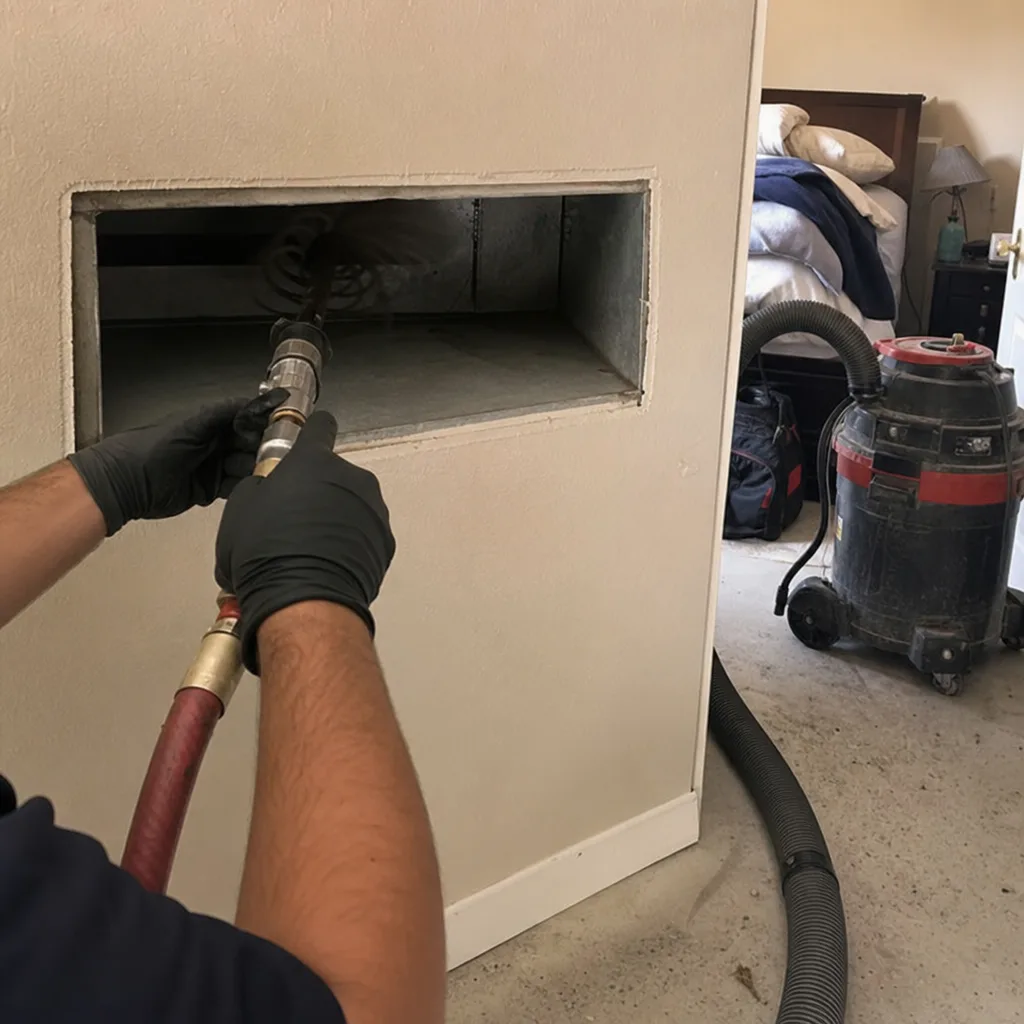
- Containment and negative pressure. The standard specifies that occupied spaces must be protected from contamination during cleaning, using HEPA-filtered negative air machines or equivalent containment. A shop vac exhausting into your living room fails this requirement.
- Cleaning method validation. ACR defines acceptable cleanliness levels and verification methods, including post-cleaning visual inspection. The “it looks better” standard is not sufficient.
- Mechanical system protection. The standard prohibits cleaning methods that damage duct materials, insulation, or connected components. This matters for Sugar Land homes with fiberglass duct board common in 2015-2020 construction.
- Documentation requirements. ACR mandates written records of scope, methods, and results. This aligns with CleanRun’s documented photo record, though we exceed ACR by photographing every run individually rather than sampling.
Competent contractors reference ACR in their proposals. We specify that our Air Duct Cleaning in Sugar Land follows NADCA ACR assessment and cleaning protocols, using equipment from manufacturers recognized in the standard’s implementation guidance. Our Rotobrush and Nikro equipment appears on NADCA’s equipment resource lists; customers can verify this independently.
The standard also addresses what we consider the most common failure mode in our market: partial cleaning. ACR defines “complete HVAC system cleaning” to include all supply and return duct runs, registers, grilles, the air handler cabinet, and the plenum. A proposal that cleans only “up to 10 vents” without defining runs, plenum, or air handler access is not ACR-compliant, regardless of what the marketer claims.
For Sugar Land homeowners, referencing ACR in your contractor selection is a practical substitute for the missing state license requirement. Ask specifically: “Will this work follow NADCA ACR standards?” A contractor who cannot answer, or who confuses NADCA with a different organization, has revealed their preparation level.
What to Demand in Writing Before Work Starts
Documentation is where the unregulated market separates into accountable and unaccountable operators. Without a state board to complain to, your written contract is your primary protection. CleanRun’s Haven Standard Clause 1, Written Price Before Any Work Starts, exists precisely because verbal agreements in this industry are unenforceable and frequently disputed.
Essential documentation for any duct work in Texas:
- Written scope of work. Specific components to be cleaned or modified: number of supply runs, return runs, registers, grilles, plenum, air handler cabinet. Vague terms like “whole house” or “all vents” are insufficient.
- Equipment specification. The actual machines and methods to be used. “Professional equipment” is meaningless. “Negative-pressure extraction using Nikro HP20 HEPA collector with Rotobrush contact agitation in each run” is verifiable.
- Pre-existing condition report. Documentation of damage, disconnected joints, or contamination found before work begins. This protects both parties from false damage claims.
- Photo record commitment. A specific statement that before-and-after photographs of each duct run will be provided. Not “photos available upon request” - included as standard deliverable.
- Price and payment terms. Total price, payment schedule, and conditions for additional charges. The $79 coupon that becomes $400 on site is a documented pattern in Texas consumer complaints.
- Warranty or guarantee terms. Specific duration, coverage, and process for claims. CleanRun’s 365-Day Done Right Promise is written on every job, not stated in marketing copy alone.
- License and insurance verification. For work crossing into HVAC territory, the contractor’s TDLR license number and certificate of insurance. CleanRun publishes our license number on every page; we do not bury it in a footer.
In Sugar Land’s competitive home market, this documentation also protects resale value. A well-documented duct maintenance record, with dated photos and written scopes, demonstrates to buyers that the home’s mechanical systems were maintained to a verifiable standard rather than subjected to periodic discount cleaning.
We deliver our documentation through a customer portal that archives every job record. When a Sugar Land homeowner in Telfair needed to prove duct maintenance for an insurance discount application, they pulled their complete record, including photos showing the 2-inch debris layer removed from their master bedroom return, in under two minutes. That is the practical value of documentation done properly.
Protecting Your Record for Resale and Insurance
The consequences of undocumented or improperly permitted duct work often surface years later, typically in two contexts: property sale and insurance claims. Both reward preparation and punish shortcuts.
Resale and home inspection. Texas sellers must disclose known defects and unpermitted work. A home inspector examining your HVAC system may note recent plenum modifications, new access panels, or evidence of duct sealing. Without permits and licensed contractor documentation, these become negotiation points or deal obstacles. We’ve been called to Sugar Land homes where the seller’s “duct cleaning” from three years prior included unpermitted plenum replacement, and the buyer’s lender now requires proof of licensed completion before funding.
The inspector’s perspective matters. InterNACHI and ASHI standards of practice require visual examination of accessible HVAC components. An inspector who sees fresh work without permits cannot assume it was done correctly. They flag it. The flag triggers the disclosure. The disclosure triggers the negotiation.
Insurance claims. Homeowners insurance covers sudden and accidental damage, not maintenance failures or faulty workmanship. If a duct cleaning causes damage, your claim may be denied if the work was performed by an unqualified contractor. Worse, if unpermitted mechanical work contributes to a loss, such as a fire originating at a poorly sealed plenum, the insurer may deny coverage entirely based on policy exclusions for unpermitted work.
Sugar Land’s 2017-2025 housing stock, much of it built during rapid construction cycles, has seen its share of warranty-period duct issues. Builders’ warranties typically expire at two years for mechanical systems. Duct work performed after warranty, if undocumented, leaves homeowners without recourse if problems emerge. Our documented photo record, maintained indefinitely, provides timestamped evidence of system condition at specific dates.
For homeowners in Sugar Land’s newer communities, we recommend treating duct maintenance records like roof or foundation documentation: organized, accessible, and complete. The 15 minutes spent filing a written scope and photo record may save thousands in resale negotiations or claim disputes.
A Practical Hiring Checklist for Sugar Land Homeowners
This checklist distills the regulatory landscape into actionable verification steps. Use it for any duct-related service in the Sugar Land market.
- Verify the specific work category. Is the scope limited to cleaning existing duct runs, or does it include repair, modification, or component replacement? Cleaning alone requires no Texas license; the other categories do.
- Request TDLR license number for any mechanical work. Verify at tdlr.texas.gov. If the company hesitates, the work likely requires a license they do not hold.
- Confirm NADCA ACR compliance in writing. Not NADCA membership alone, which is a marketing affiliation, but specific adherence to ACR assessment and cleaning standards.
- Demand equipment specification. The brand and model of cleaning equipment. Guardsman, Rotobrush, Nikro, Honeywell, and Aprilaire are recognized trade manufacturers; their presence indicates investment beyond the minimum.
- Require before-and-after photo commitment. Every duct run, not representative samples, with delivery as standard job record.
- Obtain written price before work starts. Total price, with conditions for any additional charges. Verbal estimates that “might change once we see it” are a known industry tactic.
- Check for permit requirements. For any structural penetration, new register location, or plenum work, confirm whether Sugar Land or Fort Bend County permits apply and who obtains them.
- Review insurance certificate. General liability and, for mechanical work, workers compensation. Certificate should name your property address or be current within 30 days.
- Confirm warranty terms in writing. Duration, coverage scope, and claim process. A “satisfaction guarantee” without specifics is not a warranty.
- Archive all documentation. Contracts, photos, permits, and warranties in your permanent home file. Digital storage is fine; disappearance is not.
CleanRun’s HVAC Cleaning in Sugar Land and duct services are structured around this checklist. Our technicians are background-checked and uniformed under Haven Standard Clause 3: Verified Crews, identified by name before arrival. We do not send unnamed personnel to Sugar Land homes.
Common Mistakes to Avoid
- Assuming “licensed and insured” means state-verified. In Texas, duct cleaners can claim this with only a business license and general liability. Ask specifically for TDLR HVAC contractor licensing if mechanical work is involved.
- Accepting per-vent pricing. This model incentivizes superficial work and hidden upsells. Whole-system pricing, agreed in writing before work starts, aligns the contractor’s interests with thoroughness.
- Neglecting to ask about permit requirements. Homeowners often learn of missing permits when it’s too late, during inspection or claim. Ask before work starts, and get the answer in writing.
- Treating all duct cleaners as equivalent. Sugar Land’s market includes everything from certified professionals with negative-pressure HEPA systems to operators with rented equipment and no training. The price spread reflects this, but the low end rarely delivers ACR-compliant work.
- Failing to document pre-existing conditions. Without photos of what was there before, you cannot prove that damage occurred during service. This documentation gap costs homeowners in disputes.
- Ignoring the plenum and air handler. A “vent cleaning” that never opens the plenum or examines the air handler cabinet is incomplete by ACR standards and misses the components most likely to harbor contamination.
- Discarding documentation after completion. Warranty claims, resale disclosures, and insurance applications may require records years later. Store them with your home’s permanent files.
When to Call a Professional
Call a TDLR-licensed HVAC contractor when work involves plenum modification, duct sealing, equipment replacement, or any structural penetration. For cleaning and assessment of existing ductwork, call a company that documents its methods, names its equipment, and puts its promises in writing.
CleanRun Air Duct Cleaning Sugar Land offers free estimates in Sugar Land, and we provide a Free Second Opinion on any written estimate from another contractor. We’ll put our written price next to theirs, specify our equipment and methods, and let you compare documentation standards directly. Call (346) 421-3357.
Frequently Asked Questions
No. Texas does not license duct cleaning as a standalone activity. However, duct repair, modification, or any work affecting the HVAC mechanical system requires a TDLR-issued HVAC contractor license under Occupations Code Chapter 1302. If your project involves more than cleaning existing runs, verify that your contractor holds this license.
Whole-system duct cleaning for a typical Sugar Land home, following NADCA ACR standards with documented photo record, generally ranges from $400 to $800 depending on system size and accessibility. Prices below this range typically indicate partial scope, non-HEPA equipment, or undisclosed upsell tactics. CleanRun provides written prices before work starts under Haven Standard Clause 1, with no per-vent add-ons.
Low quotes usually reflect one of three conditions: partial scope that cleans only visible registers, non-compliant equipment that lacks HEPA containment and negative pressure, or a deliberate bait-and-switch where the initial price expands dramatically once work begins. The $79 coupon model is well-documented in Texas consumer complaints. A written whole-system price, agreed before work starts, eliminates this uncertainty.
Cleaning existing duct runs does not require a permit. If the work involves new duct runs, register relocation, plenum modification, or cutting into fire-rated assemblies, Sugar Land or Fort Bend County permits are required. A competent contractor identifies permit triggers during assessment and communicates them in writing before work proceeds.
Demand a documented photo record of every duct run, before and after, delivered as part of the standard job record. Verify that equipment specifications match recognized trade brands. Confirm NADCA ACR compliance in writing. CleanRun has photographed every run on every job since 2013; customers receive these images as a permanent record of work performed.
NADCA recommends cleaning every three to five years, but Sugar Land’s climate warrants earlier assessment. Our pollen season runs February through May, and summer humidity supports microbial growth in poorly sealed systems. Homes in Riverstone, Telfair, and Imperial with mature landscaping often show accelerated debris accumulation. We recommend visual assessment every two to three years, with cleaning frequency determined by documented condition rather than calendar.
The seller must disclose known unpermitted work on the TREC Seller’s Disclosure Notice. Buyers may require retroactive permits, licensed contractor documentation, or price concessions. In some cases, lenders delay funding until compliance is proven. The cost of retroactive compliance typically exceeds the original permit cost by a significant margin.
The Bottom Line
Texas leaves duct cleaning unregulated, which places the burden of verification entirely on homeowners. The regulatory line appears when cleaning becomes repair or modification, and many homeowners discover this boundary only after a problem emerges. Protect yourself by demanding written scope, equipment specification, photo documentation, and appropriate licensing for any mechanical work. For more guides & resources, visit our blog. In Sugar Land’s active resale market, this documentation is not merely good practice; it is financial protection. CleanRun Air Duct Cleaning Sugar Land structures every job around these standards because we’ve seen, across 52,000 homes since 2013, what happens when shortcuts meet accountability.
Written by Tomas Reyes, Owner at CleanRun Air Duct Cleaning Sugar Land, serving Sugar Land since 2013.